
Most traders fail not because they lack a good strategy, but because of emotional trading. Without strong trading discipline and a resilient trader mindset, even the best setups collapse under stress. The truth is, psychology is the hidden edge behind consistent profits.
This guide shares 12 practical trading psychology tips that help you avoid emotional trading and build habits that support consistent profits. You will learn how to manage fear, control impulses, and use tools like a trading journal to understand your behavior. These insights come from real traders, research, and common patterns seen across successful trading communities.
Read More: Trading Psychology: Mastering the Mental Edge in Markets
Detach Your Identity From P&L
Many traders tie their self-worth to their daily results. When the market is green, they feel unstoppable. When it is red, they feel defeated. This emotional rollercoaster makes it hard to stay objective.
A healthier approach is to treat P and L as information rather than judgment. A win does not make you a genius and a loss does not make you a failure. It is simply data that reflects how your strategy performed under current conditions.
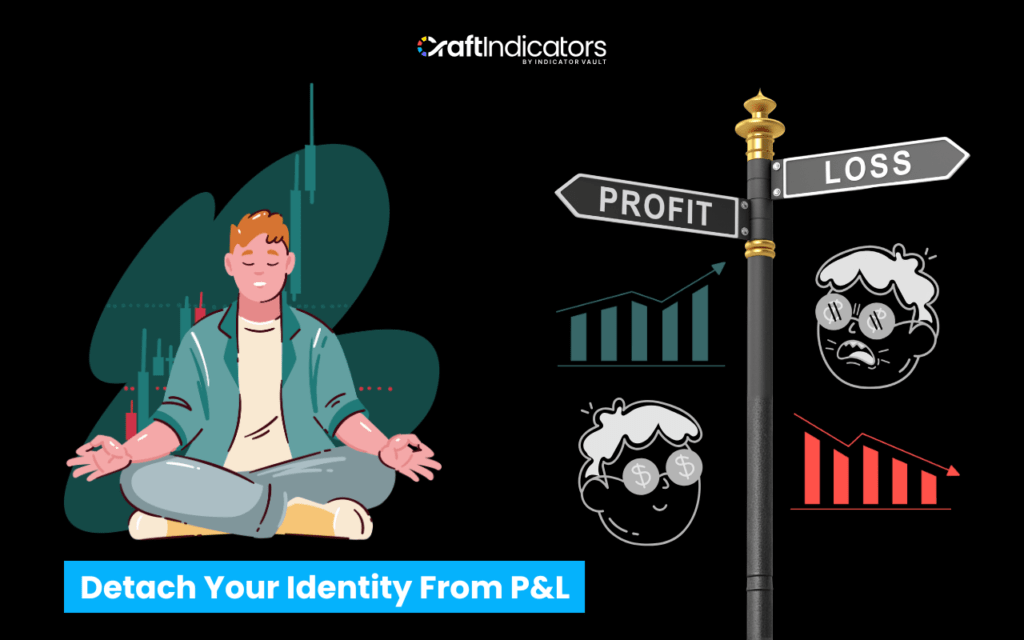
For example, imagine two traders who both lose one percent. One spirals into frustration because he sees the loss as a personal flaw. The other reviews the trade calmly and adjusts if needed. The second trader grows faster because his identity is not attached to the outcome.
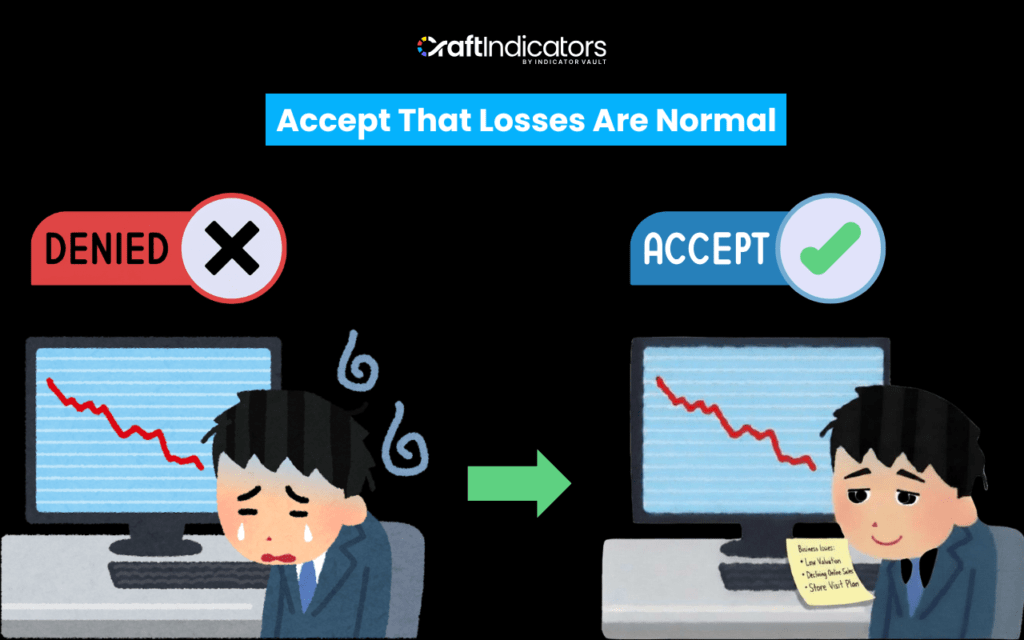
Accept That Losses Are Normal
Every trader faces losing trades. Accepting losses as part of the game reduces revenge trading and emotional spirals. Think of losses as tuition paid to the market.
Losses are not failures; they are feedback. When you embrace them as normal, you stop chasing perfection and start focusing on long-term consistency. This mindset prevents destructive behaviors like doubling down or abandoning your plan.
Stop Changing Your Strategy After One Bad Trade
Many traders abandon their strategy after a single losing trade. This creates a cycle where nothing is tested long enough to prove its value. Consistency becomes impossible because the trader keeps switching approaches.
A better method is to evaluate performance over a meaningful sample size. Ten to twenty trades reveal far more than one or two. This helps you identify whether the issue is the strategy or your execution.
Focus on Execution, Not Outcome
Judge yourself by how well you followed your plan, not by profit. This shift reduces pressure and helps you refine your process instead of chasing results.
Execution-focused traders build discipline faster because they measure what they can control. Profit is a lagging indicator; execution is a leading one. By focusing on execution, you reduce emotional attachment to outcomes.
Journal the “Why” Behind Every Trade
A journal is more than a list of entries and exits. It is a tool for understanding your emotional patterns. Writing down your reasons for taking a trade reveals habits you may not notice at the moment.
Writing down the “why” forces self-awareness. You begin to see how emotions influence decisions, which helps you break destructive cycles. Journaling also builds accountability.
The best journals are honest, not perfect. By documenting your thought process, you create a mirror that exposes habits and guides improvement.
For example:
- Trade Setup: Long position on EUR/USD at 1.0850
- Reason for Entry: Breakout above resistance with confirmation from RSI
- Risk Management: Stop-loss at 1.0820, target at 1.0900
- Emotional State: Nervous at entry, tempted to move stop-loss closer
- Outcome: Exited early due to fear, missed full profit potential
- Lesson: Fear led to premature exit. Next time, trust the plan and avoid adjusting stops emotionally.
Use Smaller Size When Emotional
When stressed, bored, or excited, reduce your position size. Smaller trades protect capital and prevent emotional blow-ups while still keeping you engaged.
Sizing down is a psychological safety net. It allows you to trade without the weight of fear or greed. This keeps your discipline intact even during volatile periods.
Master One Setup Before Adding More
Specialize in one setup until it becomes second nature. Mastery builds confidence and reduces hesitation, laying the foundation for consistent execution.
Traders who spread themselves too thin often struggle with indecision. By focusing on one setup, you simplify your process and sharpen your edge. This reduces emotional noise.
Once you master one setup, adding others becomes easier. Confidence in execution grows from depth, not breadth.
A trader who focuses only on pullbacks, for example, becomes skilled at identifying strong trends and clean retracements. Once this setup becomes automatic, he can add another without feeling overwhelmed.
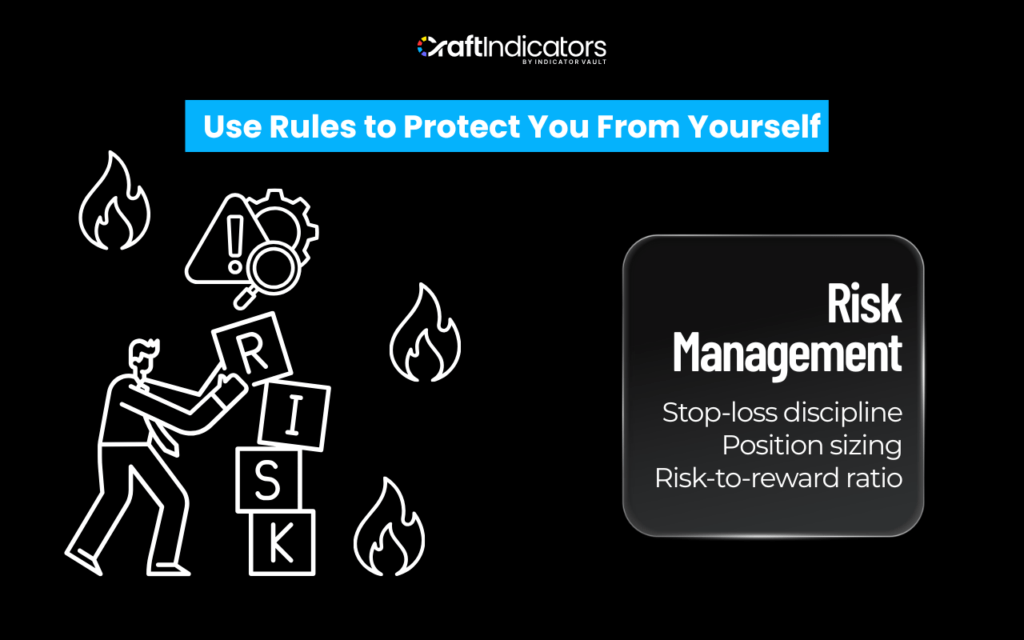
Use Rules to Protect You From Yourself
Daily loss limits, max trades per day, and pre-planned exits act as guardrails. These rules prevent emotional spirals and keep you disciplined when the market gets chaotic.
Rules are psychological anchors. They stop you from making impulsive decisions when emotions run high. Think of them as seatbelts for your trading.
By enforcing rules, you create consistency. Discipline becomes automatic, and your psychology stabilizes under pressure.
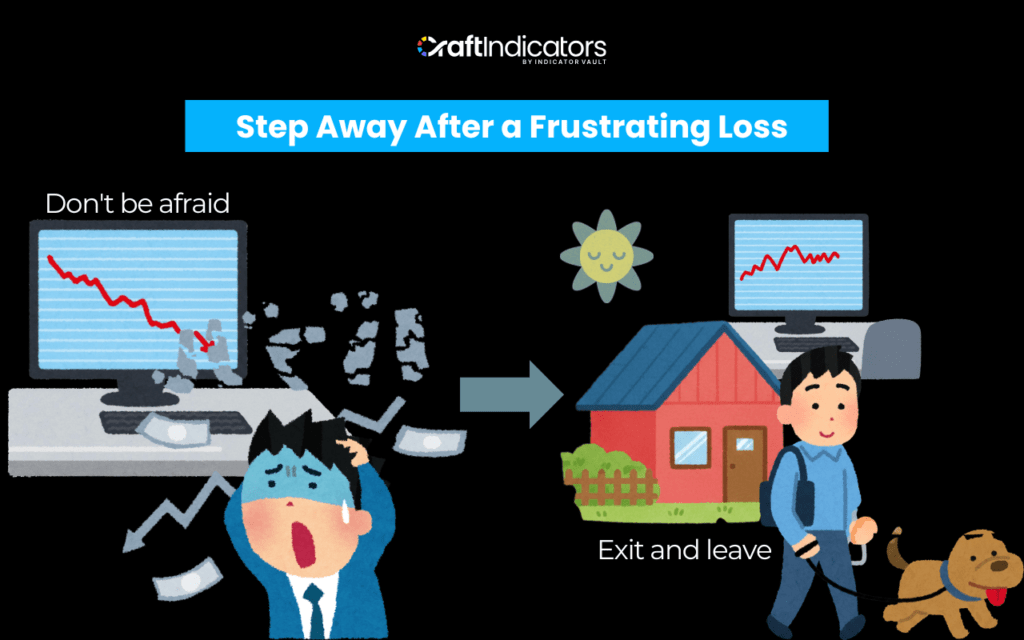
Step Away After a Frustrating Loss
A frustrating loss can trigger emotional reactions that lead to poor decisions. Stepping away gives your mind time to reset. Even a short break can restore clarity.
Walking, stretching, or drinking water helps your nervous system calm down. When your body relaxes, your thinking becomes clearer. This reduces the urge to jump back into the market.
Traders who take breaks return with clarity. This habit prevents spirals and builds long-term resilience.
Avoid Doom-Scrolling After Losses
Scrolling charts, news, or social media after a loss only fuels anxiety. Instead, step back and give your mind space to recover.
Information overload clouds judgment. Doom-scrolling creates mental clutter that leads to poor decisions. Avoiding it protects your focus.
Replace doom-scrolling with constructive reflection. Journaling or reviewing setups is far more productive than drowning in noise.
Practice Mindfulness to Interrupt Impulses
Train your “observer self” to notice stress, greed, or fear in real time. Mindfulness reduces impulsive trades and builds emotional awareness.
Mindfulness is not about suppressing emotions; it’s about noticing them without reacting. This awareness creates space between thought and action.
For example, before entering a trade, take one slow breath and ask yourself whether the decision is based on your plan or your emotions. This simple habit prevents many impulsive trades.
Build a Pre‑Market Routine to Stabilize Your Mindset
A structured routine such as reviewing levels, visualizing setups, breathing exercises anchors your brain before the session begins. Preparation reduces randomness and emotional reactivity.
Routines create consistency. They prime your mind for discipline and reduce uncertainty. This makes execution smoother and less stressful.
- Review key market levels: Check support, resistance, and overnight price action to understand the context before entering trades.
- Visualize your setups: Mentally rehearse the exact conditions that define your edge so you recognize them quickly during live trading.
- Confirm risk parameters: Set daily loss limits, position sizing rules, and stop levels to protect your account and mindset.
- Check the economic calendar: Note any scheduled news events that could cause volatility and adjust your plan accordingly.
- Practice a short mindfulness exercise: Take one to two minutes of calm breathing to reduce stress and sharpen focus.
- Write down trading intentions: Record your goals for the session, such as sticking to one setup or avoiding revenge trading.
- Commit to discipline: Remind yourself that following the plan matters more than chasing profits.
The best traders treat routines as rituals. By preparing mentally, they enter the market with confidence and clarity.
Conclusion
Strategies and indicators matter, but without discipline, they collapse under pressure. By applying these 12 trading psychology tips, you’ll shift from emotional trading to consistent execution.
Start with one improvement at a time. Small changes compound into powerful results. Over time, your mindset becomes your strongest trading advantage.
Also, follow us for all the promotions and other useful topics:
- Facebook: www.facebook.com/craftindicators
- Instagram: www.instagram.com/craftindicators
