
In fast‑moving futures markets, success depends not only on spotting opportunities but also on protecting capital with strong risk management strategies. For traders working with prop firms or managing funded accounts, the challenge is balancing aggressive trades with strict compliance rules.
This is where NinjaTrader 8 (NT8) indicators deliver an edge, offering dashboards and automated controls that keep risk in check. In this guide, we’ll explore how to leverage NT8’s unique ecosystem to strengthen your trading discipline and stay ahead in volatile markets.
What Is a Risk Management Strategy?
A risk management strategy is a structured plan that helps traders identify and assess risks before they escalate. By following a clear trading risk framework, traders can make decisions based on logic rather than emotion, ensuring capital protection even in volatile markets.
This discipline is especially important for those trading with prop firms or funded accounts, where strict rules on drawdowns and daily losses apply. A well‑defined strategy helps traders stay consistent, reduce exposure to unnecessary risks, and build a foundation for sustainable growth.
Core Risk Management Strategies
Traders rely on four primary approaches to manage uncertainty: risk avoidance, risk reduction, risk transference, and risk acceptance.
- Risk avoidance: Steering clear of trades that carry excessive volatility or unclear setups. Example: skipping a futures contract during major news events.
- Risk reduction: Limiting exposure through stop‑loss orders, smaller position sizes, or diversification across forex and equities.
- Risk transference: Shifting risk to another party, such as using options or hedging strategies to offset potential losses.
- Risk acceptance: Acknowledging certain risks as part of the strategy, like tolerating minor drawdowns within a funded account’s rules.
These methods give traders a flexible toolkit for handling uncertainty across markets. NT8 indicators later show how these strategies can be applied consistently through automation and structured decision‑making.
Read More: Risk Management Techniques: A Complete Guide for Traders
How NT8 Indicators Support Risk Management
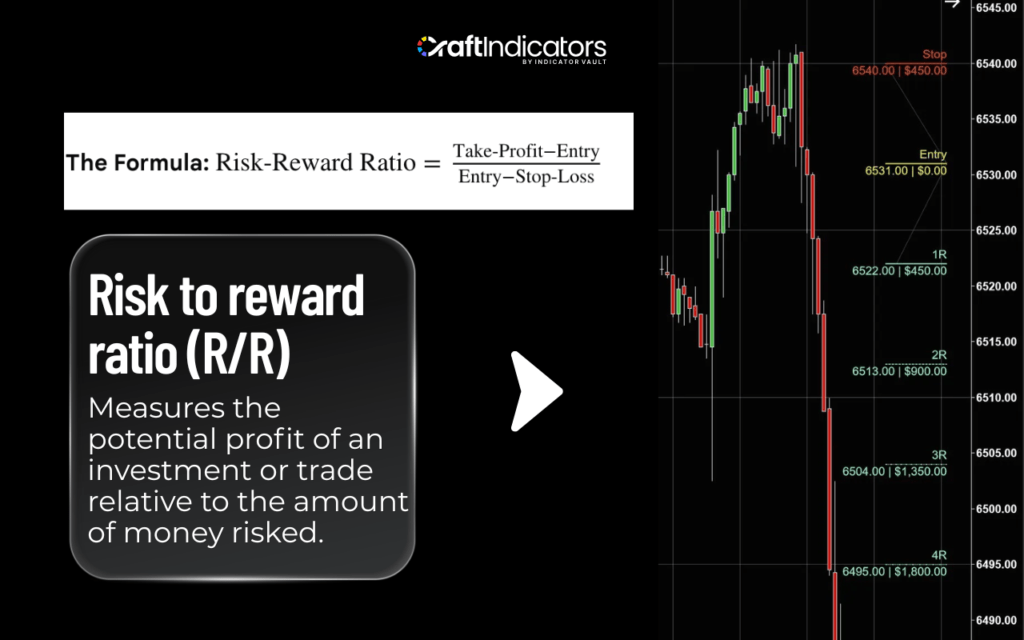
NT8 indicators provide traders with practical tools to enforce discipline and manage exposure. The ATR volatility indicator helps measure market swings, guiding position sizing and stop placement in fast‑moving futures or forex trades. Tools like RiskRewardPlus calculate the risk reward ratio, ensuring every setup aligns with a trader’s broader framework for capital protection.
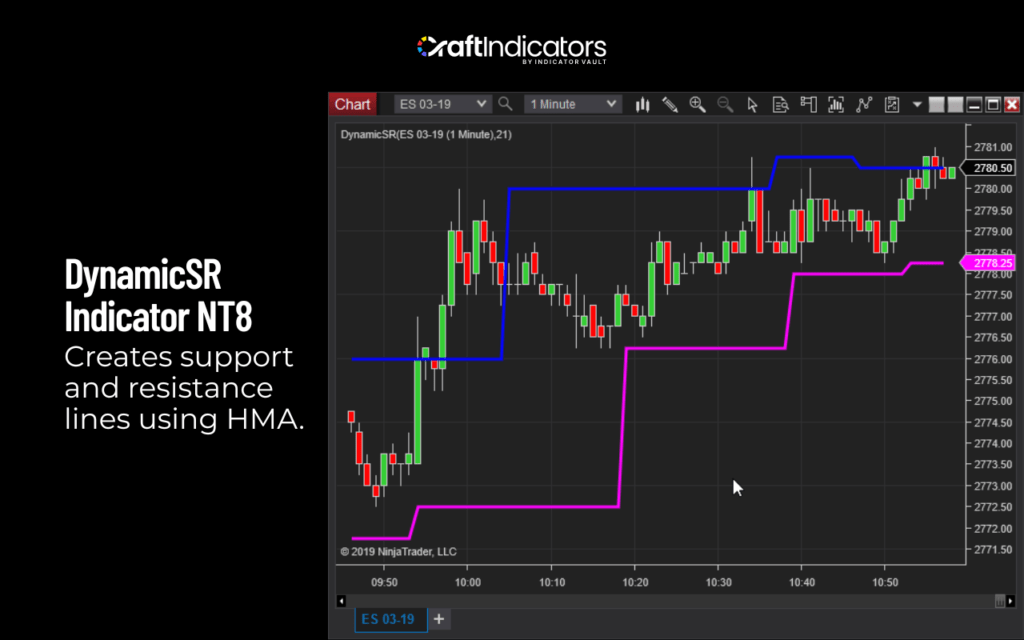
Other NT8 features strengthen execution by automating decision points. Support and resistance indicators such as DynamicSR refine stop‑loss placement, while moving averages enable trailing stop strategies that lock in profits as trades progress. These built‑in tools give traders a solid foundation for managing risk across futures, forex, and equities.
Beyond these native features, many traders look for more advanced solutions tailored to real market behavior. That’s where Craft Indicators’ custom NT8 products extend the platform’s capabilities, offering institutional‑grade insights that directly improve stop loss and take profit execution.
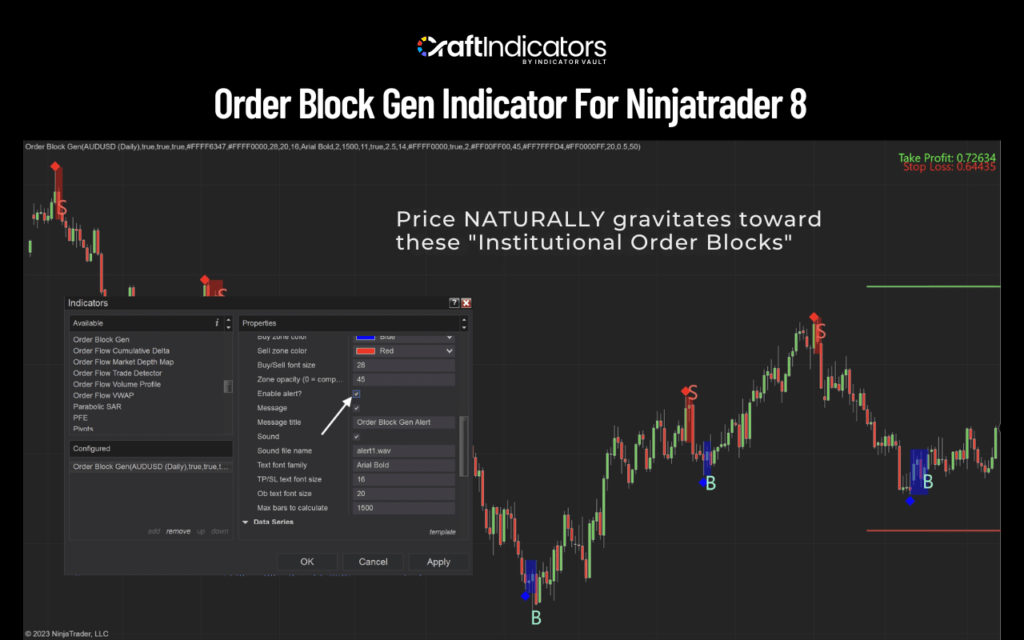
- Order Block Gen: Highlights institutional order blocks where price is likely to react. In a futures trade, stops can be placed just beyond the block to avoid false breakouts, while take profit targets align with the next liquidity zone.
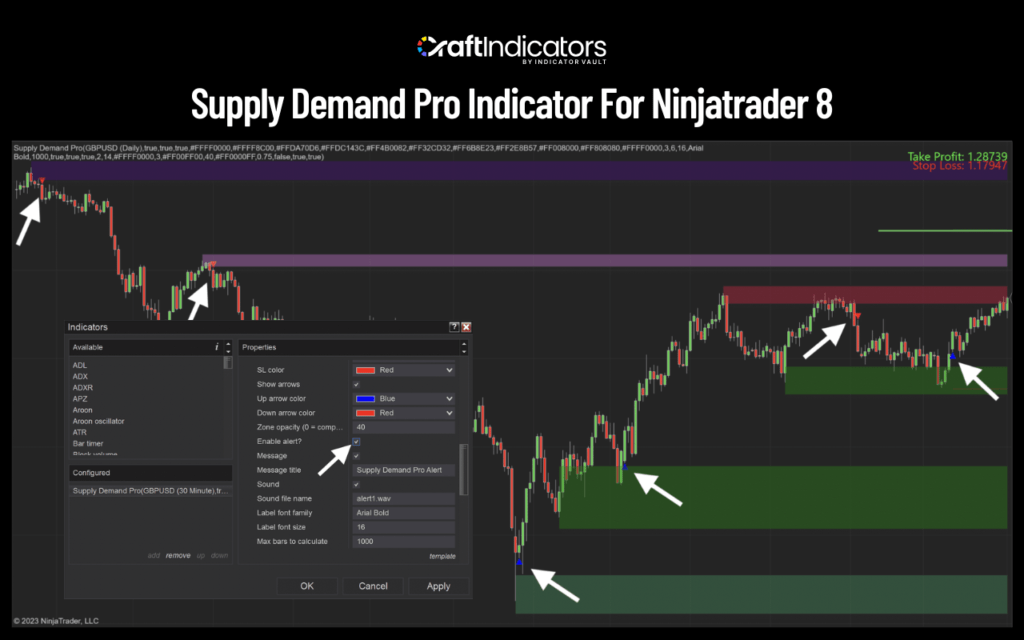
- Supply Demand Pro: Refines supply and demand zones, marking areas where price is most likely to reverse. In forex trading, this allows traders to set stops just outside demand zones and take profits near supply zones.
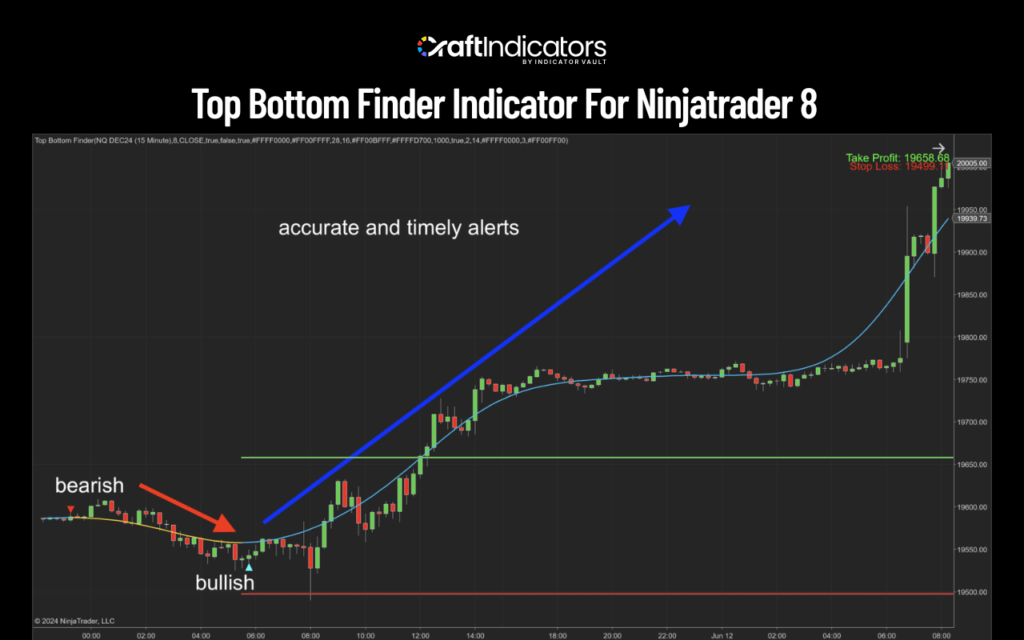
- Top Bottom Finder: Pinpoints potential market tops and bottoms in equities. Traders can trail stops as price trends, locking in gains while leaving room for continuation.
Together, these custom indicators elevate NT8’s risk management capabilities into a practical system: stops are placed logically, profits are targeted at high‑probability levels, and traders gain confidence knowing their strategies are backed by proven risk management in trading techniques.
Read More: Risk Management in Trading: Psychology, Discipline, and Smart Position Sizing
Account-Level Risk Controls in NT8
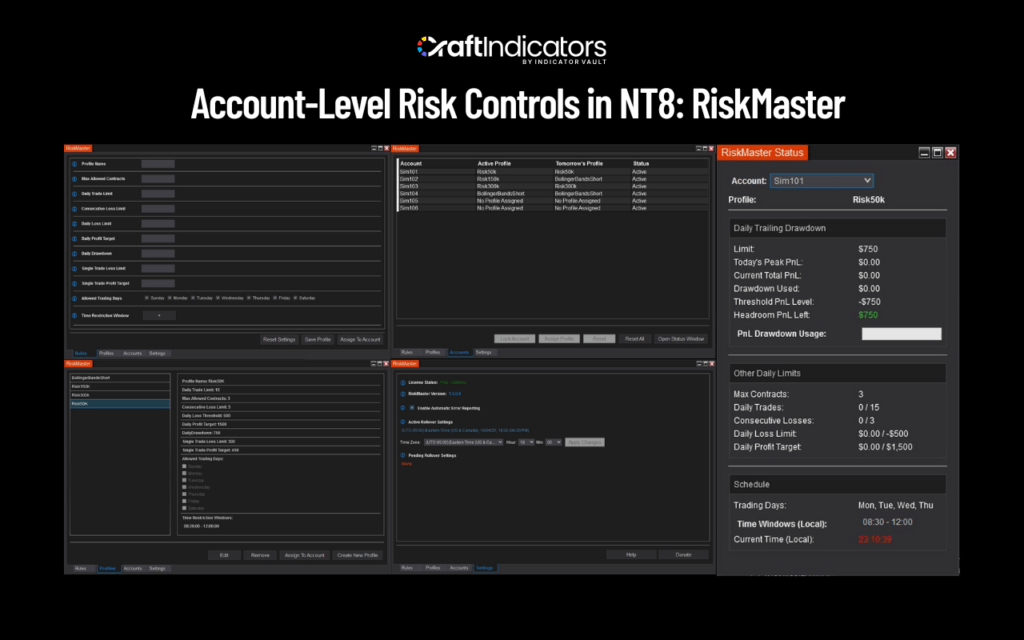
Strong account risk controls are essential for protecting traders from catastrophic losses. NT8 offers daily loss limits and profit targets as guardrails, ensuring discipline even during volatile sessions.
Community add‑ons such as RiskMaster extend NT8’s capabilities by automating account‑level protections. For example, a trader can configure RiskMaster to halt trading once a predefined loss threshold is reached, or to lock in profits after hitting a target. These controls prevent accounts from being wiped out by a single bad day and reinforce long‑term trading discipline.
Trade-Level Risk Controls
While account‑level guardrails protect the bigger picture, trade risk management happens at the execution level. NT8 provides tools to manage position sizing, ensuring traders don’t overcommit capital on a single setup.
Effective stop loss strategies are another cornerstone of trade‑level discipline. NT8 allows traders to place stops at logical levels, reducing emotional interference and protecting against sudden reversals.
A key feature here is ATM strategies, or Automated Trade Management templates. These let traders pre‑define how stops, take profits, and trailing stops will be handled once a trade is placed. For example, a forex trader might set a 20‑pip stop loss, a 40‑pip take profit, and a trailing stop that activates after 15 pips in profit. This ensures every trade follows the same rules, enforcing discipline and removing hesitation.
By combining position sizing, stop loss placement, and ATM automation, NT8 makes trade‑level controls seamless. Instead of reacting impulsively, traders rely on structured automation to execute their plan with precision.
Indicator-Driven Risk Identification
The first step in any strategy is risk identification. NT8 indicators highlight signals that reveal potential threats before they escalate.
- Volatility signals from ATR warn traders of sudden swings that may require tighter stops or reduced position sizes.
- Trend reversal indicators like Top Bottom Finder give early warnings when momentum shifts against a position.
- Liquidity zones identified by Supply Demand Pro highlight areas where price is likely to stall or reverse, guiding both stop placement and profit targets.
By combining these signals, traders gain a clearer picture of where risks lie in futures, forex, and equities. Identification comes first, and once risks are visible, NT8’s automation provides the framework to mitigate them effectively.
Final Thoughts
Effective trading risk management is the foundation of sustainable success. By combining structured strategies such as avoidance, reduction, transference, and acceptance with NT8’s advanced tools, traders create a disciplined framework that protects capital and maximizes opportunity.
NT8’s account‑level guardrails, trade‑level automation, and indicator‑driven insights work together to enforce discipline and reduce emotional decision‑making. This integration ensures traders remain consistent even in volatile markets, building resilience and avoiding catastrophic losses.
Long‑term profitability comes from mastering both the risk management best practices and the technology that enforces them. Traders who embrace this dual approach position themselves for long-term trading success. For deeper mastery, explore related strategies such as risk management in trading and day trading risk management to strengthen your edge.
Also, follow us for all the promotions and other useful topics:
- Facebook: www.facebook.com/craftindicators
- Instagram: www.instagram.com/craftindicators
