
What is futures trading? At its core, futures trading is a cornerstone of modern financial markets. A futures contract is a type of financial derivative, meaning its value is based on an underlying asset. It is a standardized agreement between two parties to buy or sell that asset at a predetermined future price.
These contracts are widely used across commodities such as oil, corn, and gold, as well as financial instruments like Treasury bonds and stock indices.
Retail traders often turn to futures because they provide opportunities for speculation, hedging, and risk management. By locking in a price agreement, traders can either protect themselves against volatility or attempt to profit from anticipated market moves.
What Is Futures Trading? And What are Futures Contracts?
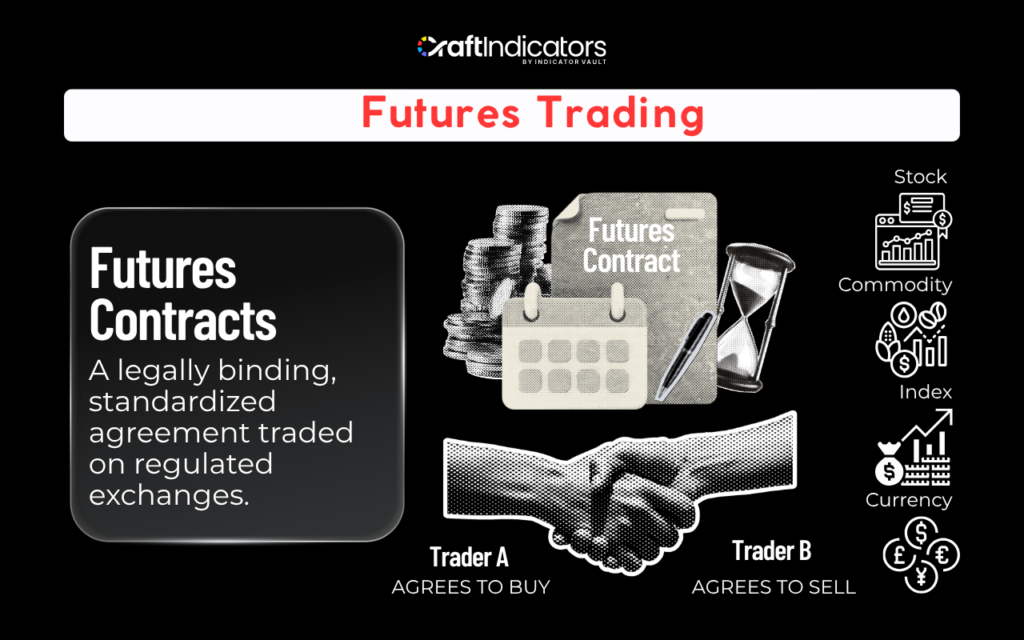
A futures contract is a legally binding, standardized agreement traded on regulated exchanges. This standardization ensures transparency and liquidity, making futures accessible to retail traders.
Examples include:
- Commodities futures: oil, corn, wheat, gold.
- Financial instruments: Treasury bonds, currencies, and equity indices such as the S&P 500.
There are two primary settlement methods:
- Physical delivery: the actual commodity is delivered (e.g., barrels of oil).
- Cash settlement: no physical delivery occurs; instead, the difference between the agreed price and the market price is settled in cash.
Why Trade Futures?
When considering why traders turn to futures, it helps to recognize that these contracts serve two primary purposes. On one hand, they open the door to speculation, allowing traders to pursue profit from price movements with relatively small amounts of capital.
On the other hand, they provide a reliable mechanism for hedging, giving businesses and investors a way to manage risk and stabilize costs. These two motivations often coexist in the same marketplace, creating the balance of opportunity and protection that makes futures trading so versatile.
Speculation and Profit Potential
Futures are popular among traders seeking to capitalize on market speculation. Because futures are leveraged products, even small price movements can result in significant gains or losses. For instance, a one point move in the E‑mini S&P 500 futures can translate into a meaningful profit or loss depending on position size.
Hedging and Risk Management
Beyond speculation, futures are widely used for hedging strategies. Farmers may lock in crop prices months before harvest, while airlines hedge fuel costs to protect against volatility. This price protection helps stabilize operations and budgets even when markets swing.
Key Concepts Every Beginner Must Know
Before diving into the mechanics of trading, it is essential to understand the foundational elements that shape every futures position. These key concepts provide the framework for how contracts are valued, how profits and losses are calculated, and how risk is managed.
Margin and leverage explain the capital requirements and exposure, ticks and points define the smallest movements that impact gains or losses, and contract specifications outline the structure of each instrument.
Together, they form the building blocks that every retail trader must master before placing a trade.
Margin and Leverage
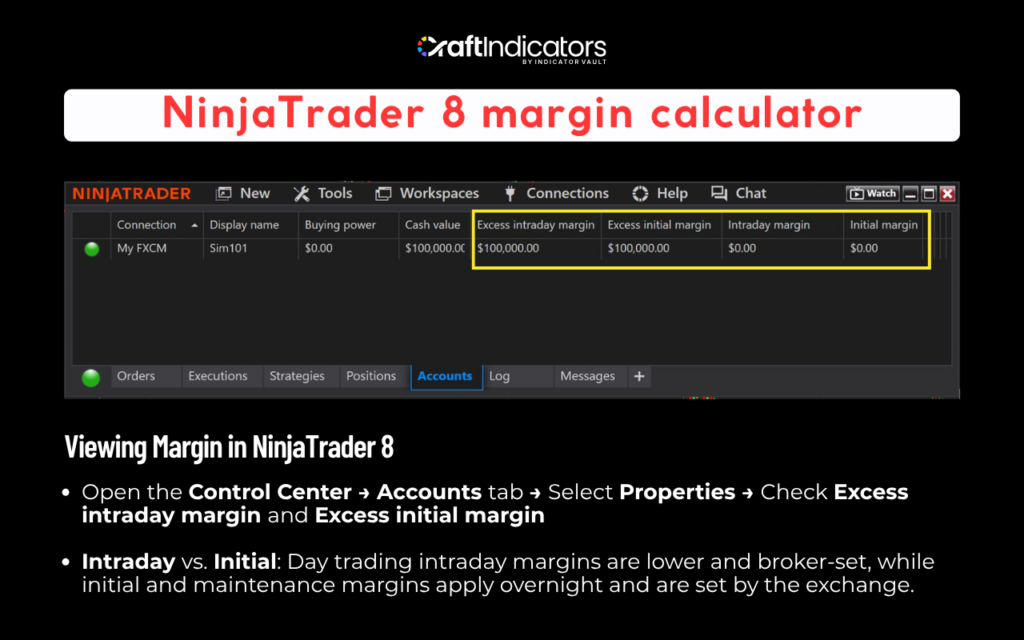
To open a futures position, traders must deposit an initial margin. If the account balance falls below the maintenance margin, additional funds are required. Futures trading offers high leverage, meaning small deposits control large positions.
Ticks and Points
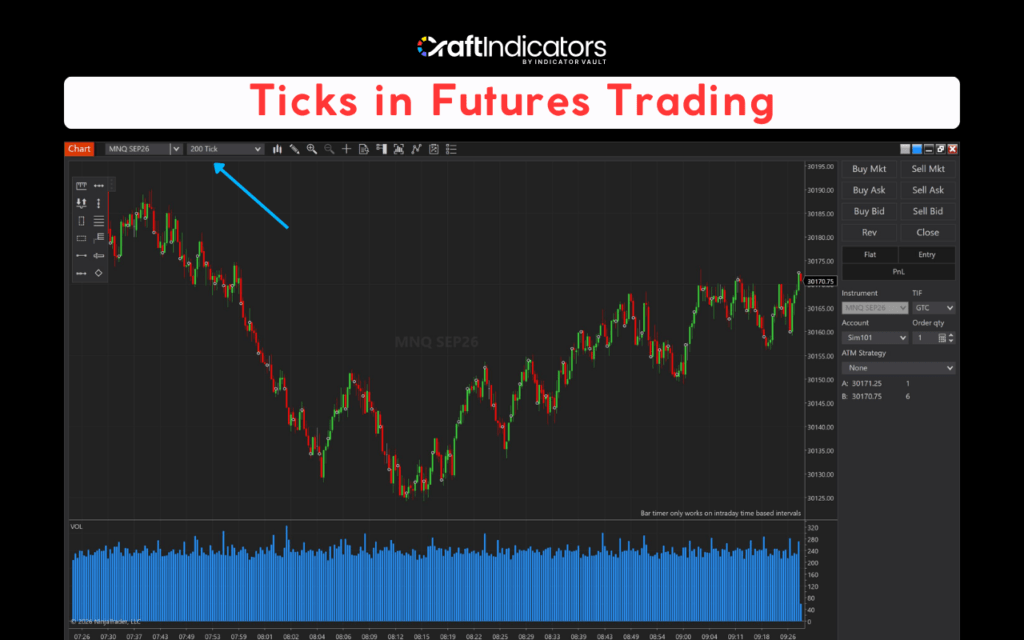
A tick in futures trading is the smallest price movement allowed by a contract. For example, in the E‑mini S&P 500, one tick equals 0.25 points, worth $12.50. Understanding tick size and tick value is crucial for accurate profit and loss calculation.
Read More: What is a tick in futures trading
Contract Specifications
Each futures contract has defined specifications including contract size, expiration date, and tick value. For instance, the E‑mini S&P 500 futures contract represents $50 times the index value, with quarterly expirations.
Futures Trading Platforms and Tools
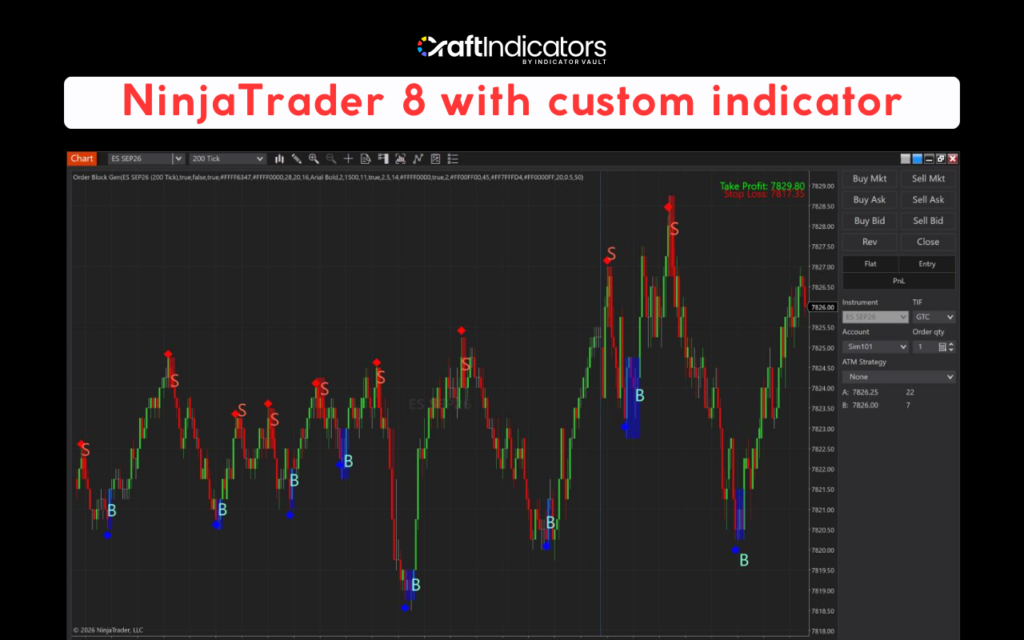
Choosing the right futures trading platform is critical. NinjaTrader 8 is a leading choice for retail traders who interested in futures trading thanks to:
- Custom indicators for personalized strategies
- Advanced charting tools for technical analysis
- Backtesting capabilities to refine strategies before risking capital
Read More: What is the Best Futures Trading Platform: NinjaTrader, TradeStation & More
Futures vs Other Derivatives
Futures differ from options trading in obligations and risk. With futures, both parties are obligated to fulfill the contract. Options, however, give the buyer the right but not the obligation to act.
- Risk profiles: Futures carry unlimited risk, while options limit risk to the premium paid
- Trading strategies: Futures are often used for hedging and speculation, while options provide flexibility
Read More: Futures Trading vs Options: Key Differences, Benefits, and Strategies for Retail Traders
| Futures Obligation to buy/sell |
Options Right, not obligation |
|
| Contract Type | Standardized agreement | Right to buy or sell |
| Obligation | Both parties must fulfill | Buyer has choice |
| Risk Profile | Unlimited potential loss | Limited to premium paid |
| Leverage | High leverage | Moderate leverage |
| Settlement | Cash or physical delivery | Cash settlement only |
| Use Cases | Speculation, hedging | Speculation, hedging, income |
| Cost | Margin deposit | Premium upfront |
| Expiration | Fixed dates | Fixed dates, can expire worthless |
| Liquidity | Highly liquid | Liquid but varies by contract |
| Strategy Flexibility | Directional trades | Directional, spreads, covered calls |
Practical Example: Trading Futures on NinjaTrader 8
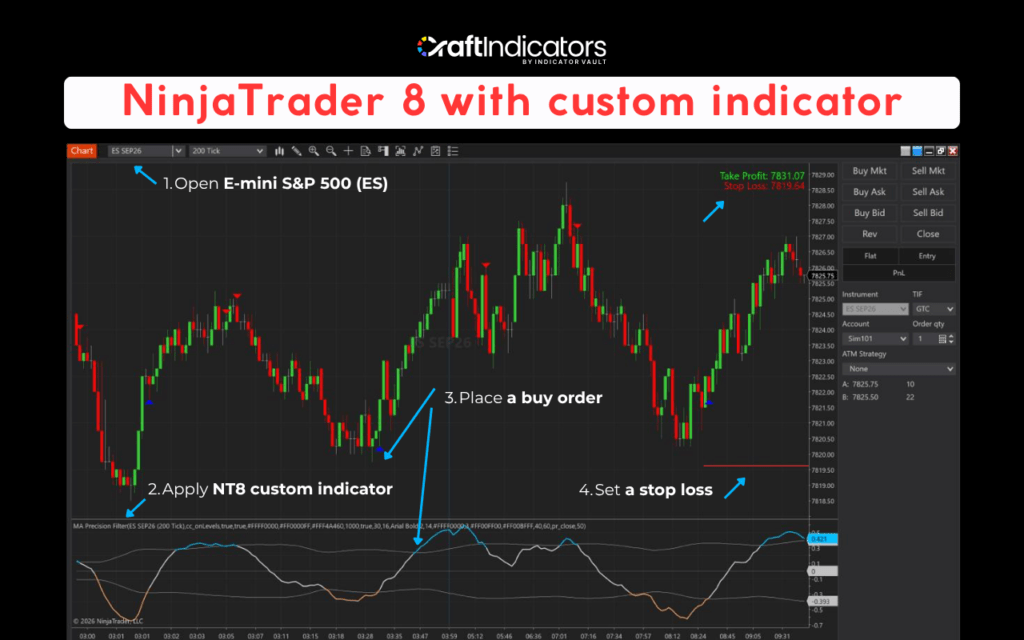
Here is a simple walkthrough:
- Futures chart setup: Open an E‑mini S&P 500 chart in NinjaTrader 8
- Apply custom indicators: Add a moving average crossover indicator
- Trade execution: Place a buy order when the short‑term average crosses above the long‑term average
- Stop‑loss placement: Set a stop‑loss below recent support to manage risk
Risks and Considerations
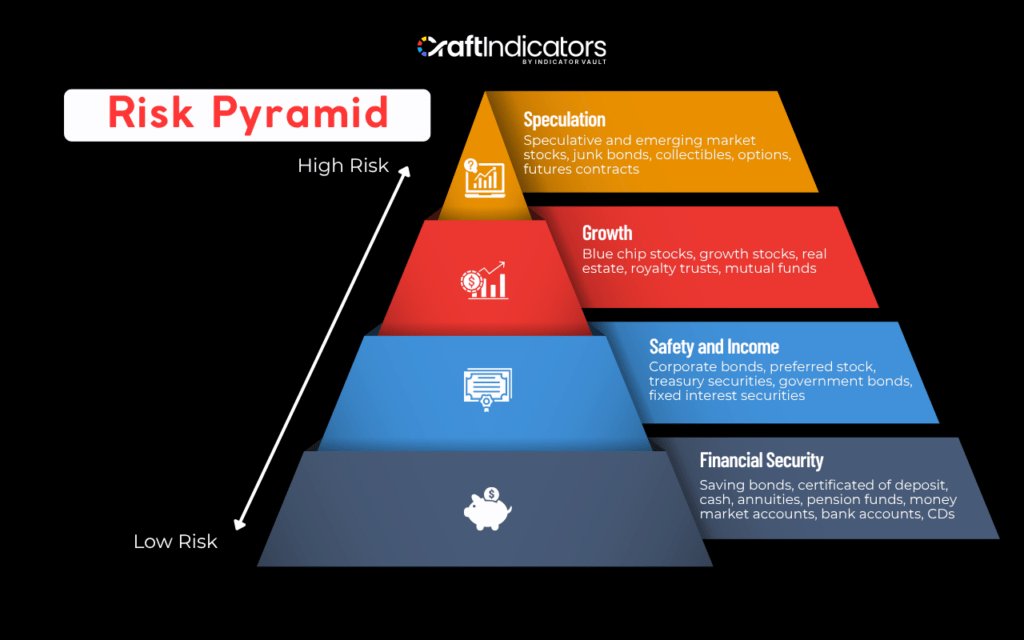
Futures trading involves significant risk due to leverage. While leverage magnifies gains, it also magnifies losses. Market volatility can quickly erode capital if risk management is ignored.
Regulatory bodies such as the CFTC and NFA oversee futures markets, ensuring fair practices and protecting traders.
Read More: Risk Management in Trading: Psychology, Discipline, and Smart Position Sizing
Conclusion
Futures trading offers retail traders a versatile tool for speculation and hedging. With platforms like NinjaTrader 8, traders can leverage custom indicators, advanced charting, and backtesting to refine their strategies.
Whether you are exploring futures trading basics, testing strategies on a NinjaTrader demo, or building confidence in your approach, the key is disciplined risk management.
Also, follow us for all the promotions and other useful topics:
- Facebook: www.facebook.com/craftindicators
- Instagram: www.instagram.com/craftindicators
