
In futures trading, every price movement matters. A tick is the smallest price increment allowed in a futures contract. Think of it as the building block of market measurement.
Whether you are trading crude oil, gold, or the E-mini S&P 500, ticks define how contracts are quoted, how profits and losses are calculated, and how risk is managed.
Understanding Tick Basics: What is A Tick in futures Trading
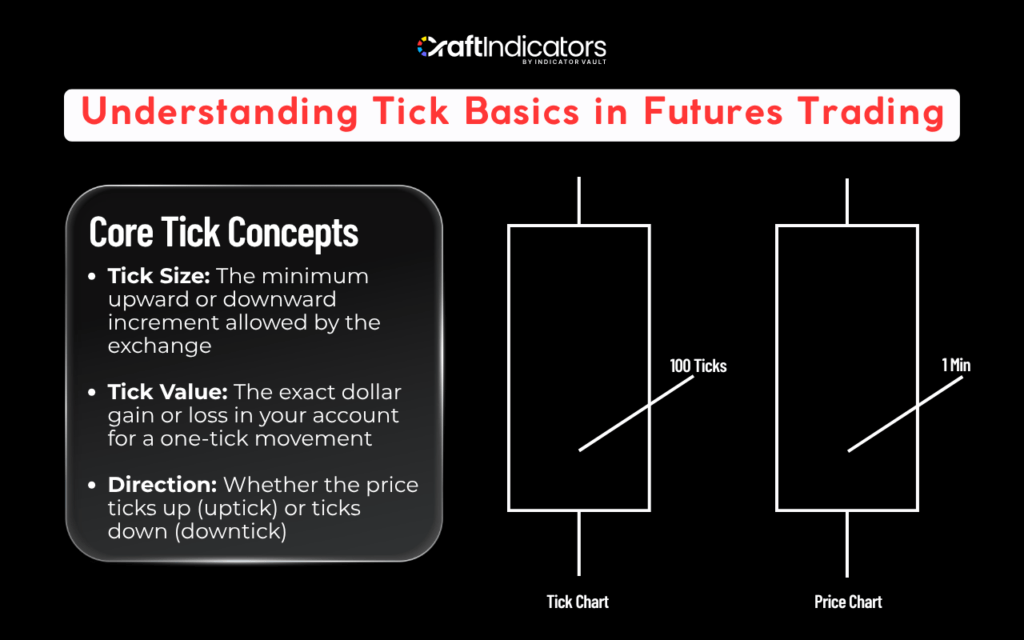
A tick represents the minimum price movement in a futures market. It is the smallest unit by which a contract can fluctuate. For example, the E-mini S&P 500 futures contract has a tick size of 0.25 points. Each tick is worth $12.50. This means if the market moves one tick, your position gains or loses $12.50 depending on direction.
The distinction between tick size and tick value is critical. Tick size refers to the numerical increment in the price quote. Tick value refers to the monetary worth of that increment. Traders must grasp both to calculate potential gains and losses accurately.
Read More: Futures Trading vs Options: Key Differences, Benefits, and Strategies for Retail Traders
Tick Size and Tick Value Explained
Understanding tick size and tick value requires breaking them down individually. These two concepts are connected but not identical.
Tick Size
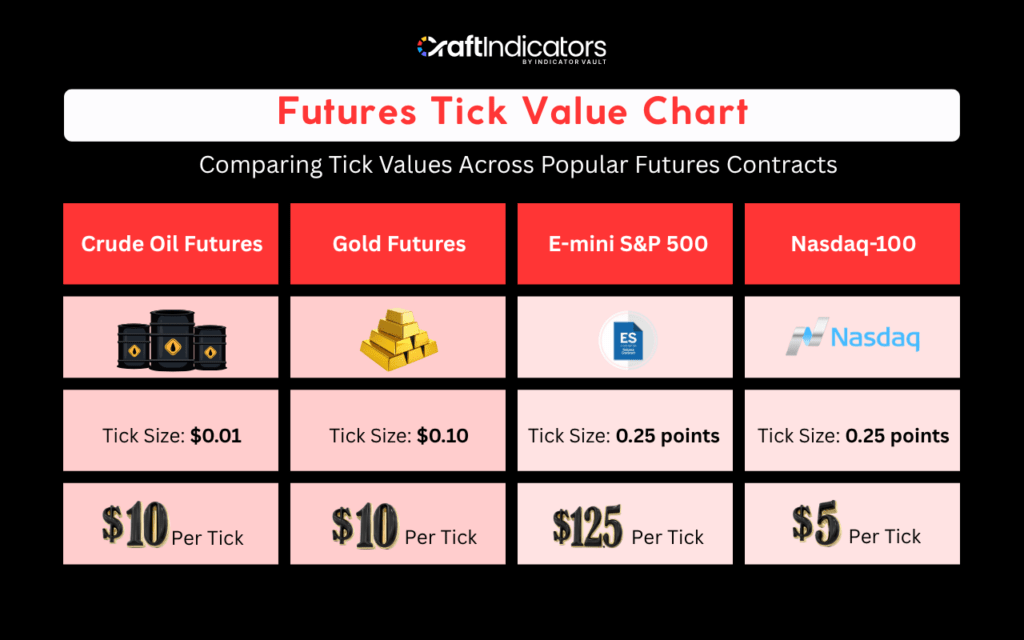
Tick size is the minimum price increment a contract can move. Each futures market sets its own tick size. For example, crude oil futures have a tick size of $0.01 per barrel. Gold futures have a tick size of $0.10 per ounce. The E-mini S&P 500 has a tick size of 0.25 index points.
Tick Value
Tick value is the dollar amount associated with one tick. It is calculated by multiplying the tick size by the contract specifications. For crude oil, one tick of $0.01 equals $10 because the contract size is 1,000 barrels. For gold, one tick of $0.10 equals $10 because the contract size is 100 ounces. For the E-mini S&P 500, one tick of 0.25 points equals $12.50.
| Contract | Tick Size | Tick Value |
| Crude Oil | $0.01 | $10 |
| Gold Futures | $0.10 | $10 |
| E-mini S&P 500 | 0.25 points | $12.50 |
How Ticks Impact Trading Decisions
Ticks are more than abstract measurements. They directly affect trading outcomes. For example, if the E-mini S&P 500 moves 10 ticks, that equals a $125 gain or loss depending on your position. This simple calculation shows why traders must know tick values before entering trades.
Ticks also guide risk management. Position sizing and stop-loss placement depend on tick values. If you set a stop-loss 20 ticks away in crude oil, you risk $200 per contract. Misunderstanding tick values can lead to overleveraging or underestimating risk.
Read More: Futures Trading Strategies Explained with Real Examples
Using NinjaTrader 8 to Track Ticks
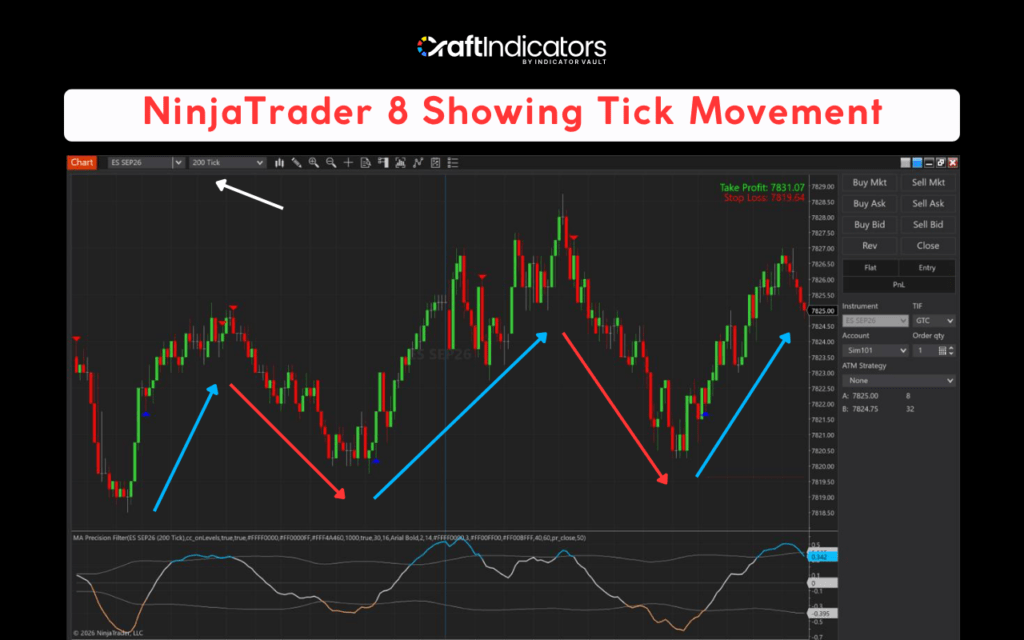
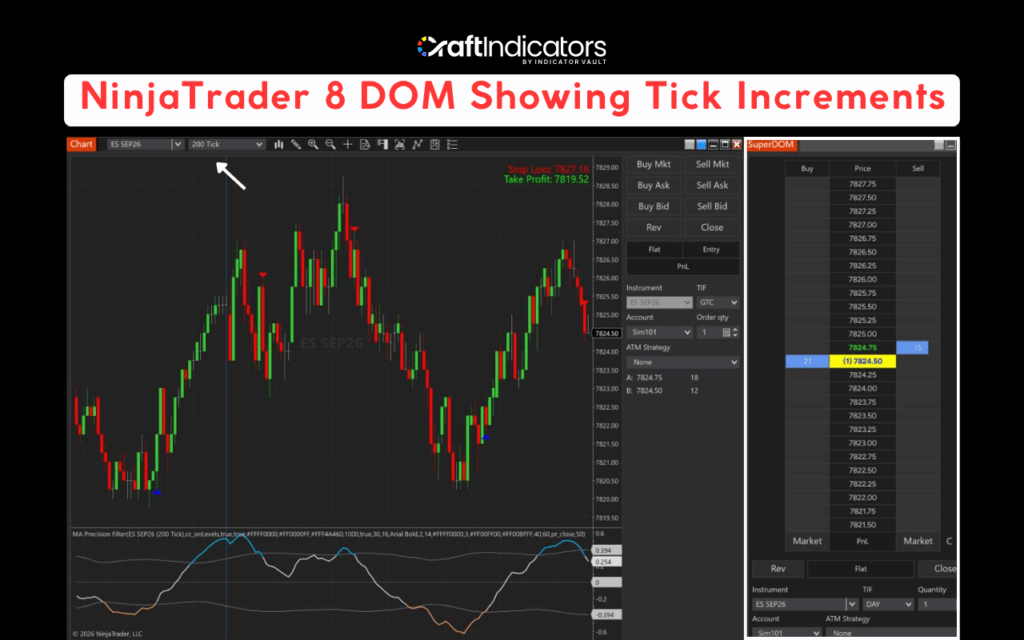
NinjaTrader 8 makes tick tracking straightforward. The platform displays tick size and tick value directly in the Depth of Market (DOM) window. Custom indicators can visualize tick movement, helping traders see how price increments accumulate into profit or loss.
Retail traders often use tick-based indicators to measure volatility and momentum. These tools highlight how quickly ticks accumulate, offering clues about market strength or weakness.
Practical Examples of Tick Calculations
Let’s look at two case studies:
- Crude Oil Futures: Tick size = $0.01, tick value = $10. A 15-tick move equals $150.
- Gold Futures: Tick size = $0.10, tick value = $10. A 25-tick move equals $250.
These examples show how small price increments can add up quickly. Traders who understand tick values can calculate risk and reward with precision.
Common Mistakes Beginners Make with Ticks
Beginners often confuse tick size with tick value. They may think a tick of 0.25 points in the E-mini S&P equals $0.25, when in fact it equals $12.50. This misunderstanding can lead to poor risk management.
Another mistake is ignoring how ticks affect margin requirements. A small tick increment does not mean small risk. Overleveraging is common when traders underestimate tick value. Always calculate the dollar impact of ticks before entering trades.
Read More: What is Futures Trading? Beginner’s Guide for Retail Traders
Conclusion
Ticks are the foundation of market measurement in futures trading basics. They define the minimum price movement in a contract, determine profit and loss, and guide risk management. Mastering tick size and tick value is essential for speculative trading and disciplined risk assessment.
NinjaTrader 8 provides powerful tools to track ticks and visualize their impact. By understanding ticks, retail traders can make smarter decisions, avoid common pitfalls, and build strategies with confidence.
If you found this guide helpful, join our mailing list for more beginner-friendly yet technical insights. You will receive exclusive tutorials, tick value cheat sheets, and updates on custom NinjaTrader indicators. Sign up today and take your trading knowledge to the next level.
Also, follow us for all the promotions and other useful topics:
- Facebook: www.facebook.com/craftindicators
- Instagram: www.instagram.com/craftindicators
