
Effective risk identification is the foundation of the risk management process. By spotting potential threats early, traders and businesses can strengthen planning, reduce uncertainty, and improve decision‑making. Identification is the first step toward meaningful risk assessment and mitigation, ensuring that risks are managed before they escalate.
Why Risk Identification Matters
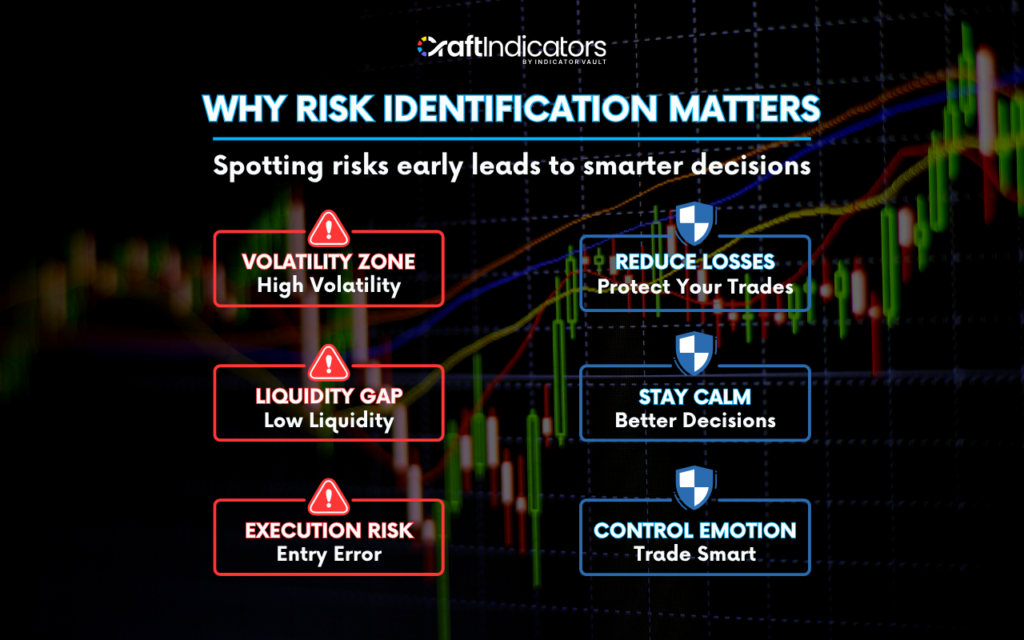
Every strategy, whether in trading or business, faces uncertainty. Identifying risks early allows leaders to prepare responses instead of reacting under pressure. This improves confidence, reduces losses, and supports long‑term sustainability.
In trading, risk identification is especially important because markets move fast. Recognizing exposure to volatility, liquidity gaps, or execution errors helps traders apply risk control measures before losses occur. Strong identification also supports better trading psychology, reducing emotional mistakes.
Types of Risks to Identify
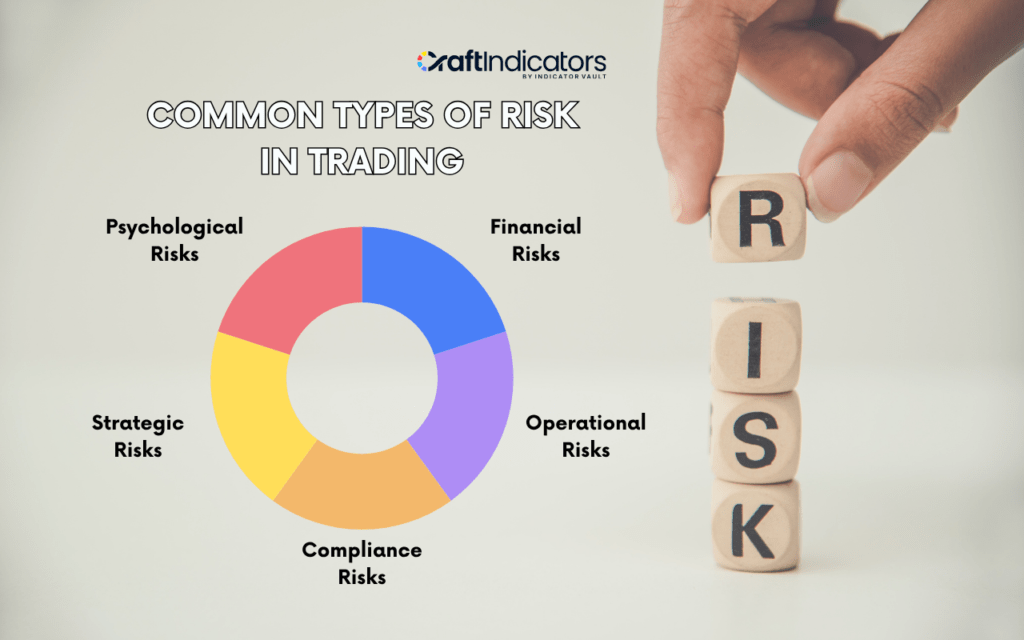
Risks can be grouped into clear risk categories. For traders, identifying these categories ensures that each type is addressed with the right risk identification process and appropriate risk control measures.
Common Types of Risks:
- Financial Risks
- Operational Risks
- Compliance Risks
- Strategic Risks
- Psychological Risks
Financial risks include market swings, leverage exposure, and sudden price volatility. Traders must anticipate how intraday moves can impact capital and apply stop loss strategies or position sizing to limit damage.
Operational risks involve system failures or poor execution. Even small delays in trade entry can magnify losses. Identifying operational risks ensures traders use reliable platforms and automation tools to reduce errors.
Compliance risks relate to regulations, while strategic risks involve poor planning or misaligned goals. Ignoring compliance can lead to penalties or account restrictions. Identifying compliance risks ensures traders operate within safe and legal boundaries.
Strategic risks stem from poor planning, misaligned goals, or weak trading frameworks. Without a clear strategy, traders may take inconsistent positions that increase exposure. Identifying strategic risks helps refine the overall risk management framework.
For traders, psychological risks are equally important. Overconfidence, FOMO, or revenge trading can undermine discipline. Categorizing risks ensures that each type is addressed with the right risk identification process.
Read More: Trading Psychology: Mastering the Mental Edge in Markets
Risk Identification Methods and Techniques
Structured approaches help uncover hidden risks. Each method offers a different lens for spotting potential problems, making the risk identification process more reliable.
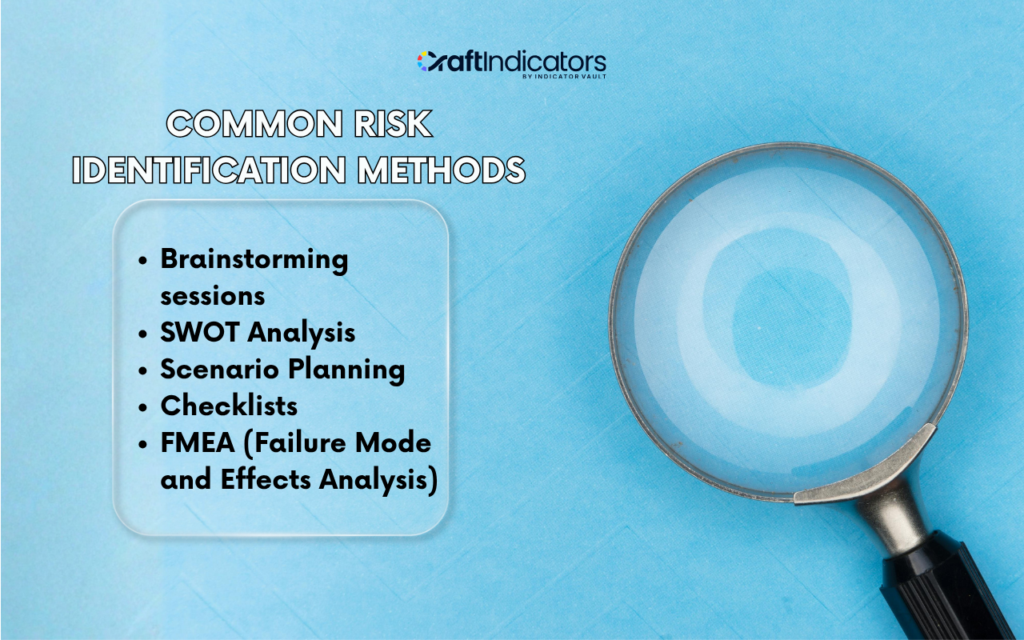
Common risk identification methods include:
- Brainstorming sessions: A collaborative method where teams generate as many potential risks as possible. It encourages open discussion and surfaces risks that might otherwise be overlooked.
- SWOT Analysis: Examines strengths, weaknesses, opportunities, and threats. This structured view helps traders and businesses identify risks tied to internal weaknesses or external threats.
- Scenario Planning: Considers “what‑if” situations to anticipate possible outcomes. By exploring different scenarios, traders can prepare for volatility or unexpected market events.
- Checklists: Uses predefined lists of common risks to ensure nothing is missed. This simple tool is effective for routine reviews and consistent monitoring.
- Delphi: Gathers expert opinions anonymously and iteratively to identify risks. It reduces bias and builds consensus on the most critical threats.
- FMEA (Failure Mode and Effects Analysis): Analyzes potential points of failure in systems or processes. It prioritizes risks based on severity, likelihood, and detectability, making it highly actionable.
These risk identification techniques are widely used in project management and trading. They provide a systematic way to anticipate problems, making risk mitigation more effective.
Risk Identification Tools for Traders and Businesses
Tools make identification practical. Risk registers and logs document potential threats, while heat maps visualize severity and likelihood. In trading, NT8 platforms add another layer of support.
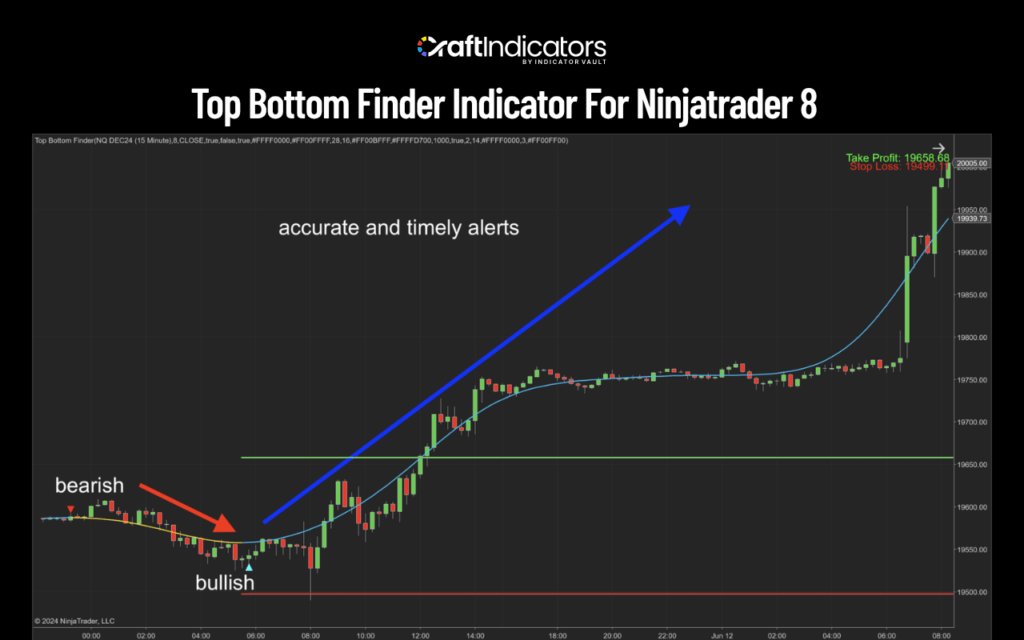
Craft Indicators for NT8 provide automated entry and exit signals, dynamic stop loss and take profit levels, and real‑time risk visualization. These risk identification tools integrate directly into trading workflows, ensuring that risks are not only identified but acted upon.
Read More: Best NinjaTrader Indicators for Futures Trading
Risk Identification in Trading
Trading requires specialized identification. Market risk comes from sudden price swings, while liquidity risk arises when orders cannot be filled at expected prices. Execution risk occurs when trades are delayed or mis‑entered.
Read More: Risk Management in Trading: Psychology, Discipline, and Smart Position Sizing
By maintaining a trading risk log, traders can track recurring issues. Identifying risks like intraday volatility or leverage exposure allows for proactive adjustments. This makes risk identification in trading a critical step in building consistent strategies.
The Risk Identification Life Cycle
Risks evolve over time, which is why identification must be continuous. In trading, the risk identification life cycle begins with pre‑trade planning, continues during live execution, and extends into post‑trade review.
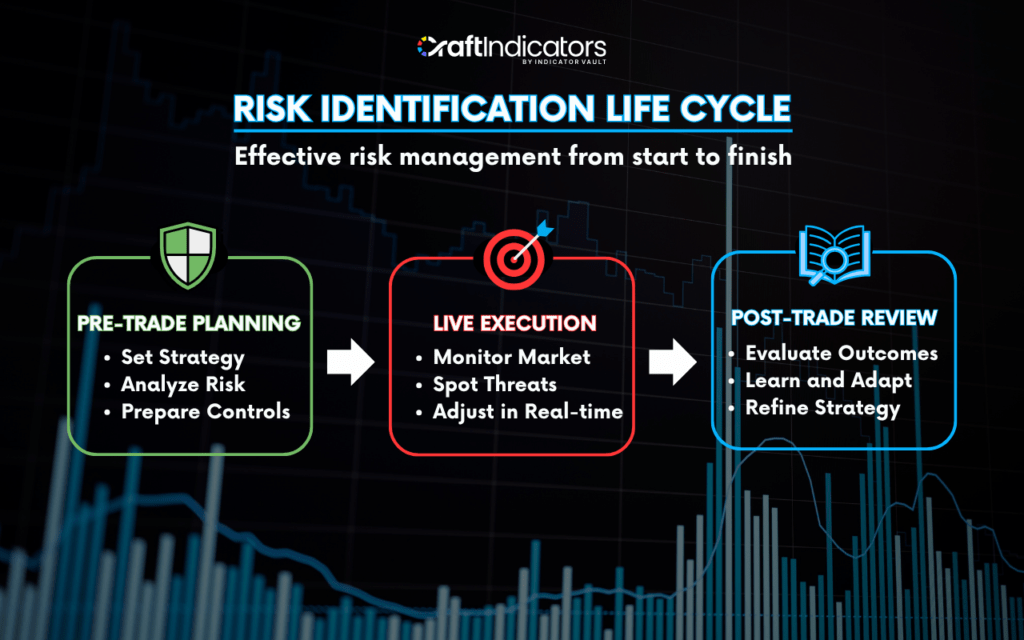
Conditions change daily, so risks must be reassessed regularly. A strong risk identification process ensures that traders adapt to new market realities instead of relying on outdated assumptions.
Best Practices for Effective Risk Identification
To maximize effectiveness, traders and businesses should follow proven practices. Involve stakeholders to capture diverse perspectives. Document risks clearly in logs or registers. Update records regularly to reflect changing conditions.
Integrating NT8 automation ensures that identification is not left to chance. These risk management best practices combine human judgment with technology, creating a proactive system that strengthens resilience.
Read More: Risk Management Strategies with NT8 Indicators
Conclusion: Turning Risk Identification into Action
Strong risk identification is the first step toward effective risk management in trading. By combining structured methods, practical tools, and continuous monitoring, traders can anticipate challenges and protect their capital.
The path to success lies in preparation. With a clear framework, disciplined application, and support from NT8 indicators, risk identification becomes more than theory—it becomes a daily practice that ensures long‑term success.
Also, follow us for all the promotions and other useful topics:
- Facebook: www.facebook.com/craftindicators
- Instagram: www.instagram.com/craftindicators
