
Day trading offers exciting opportunities, but without strong risk management in trading, it can quickly lead to losses. Effective day trading risk management combines strict rules, smart tools, and disciplined psychology to ensure capital preservation. Traders must apply stop loss strategies, use proper position sizing, and evaluate every setup with a clear risk reward ratio.
In fast markets, daily loss limits and awareness of intraday volatility are essential safeguards. Beyond technical tools, mastering trading psychology prevents emotional mistakes. By combining proven risk control measures with modern platforms like NT8, traders can build a resilient framework that supports consistency and long‑term success.
The Unique Risk Landscape of Day Trading
Day trading is unlike any other style of trading. The use of leverage magnifies both gains and losses, while intraday price swings can be extreme. A single news release or economic event can trigger sharp moves within seconds. Traders must be prepared for this constant exposure to volatility.
Execution speed also matters. Delays in entering or exiting trades can turn small risks into large losses. Combined with the psychological stress of rapid decision‑making, these factors make day trading uniquely challenging. Recognizing this landscape is the first step toward building a strong risk management plan.
Proven Capital Protection Rules for Day Traders
Protecting capital is the foundation of survival. The most effective safeguard is setting daily loss limits. Once a trader reaches that threshold, trading stops for the day. This prevents emotional spirals such as revenge trading.
Read More: Trading Psychology: Mastering the Mental Edge in Markets
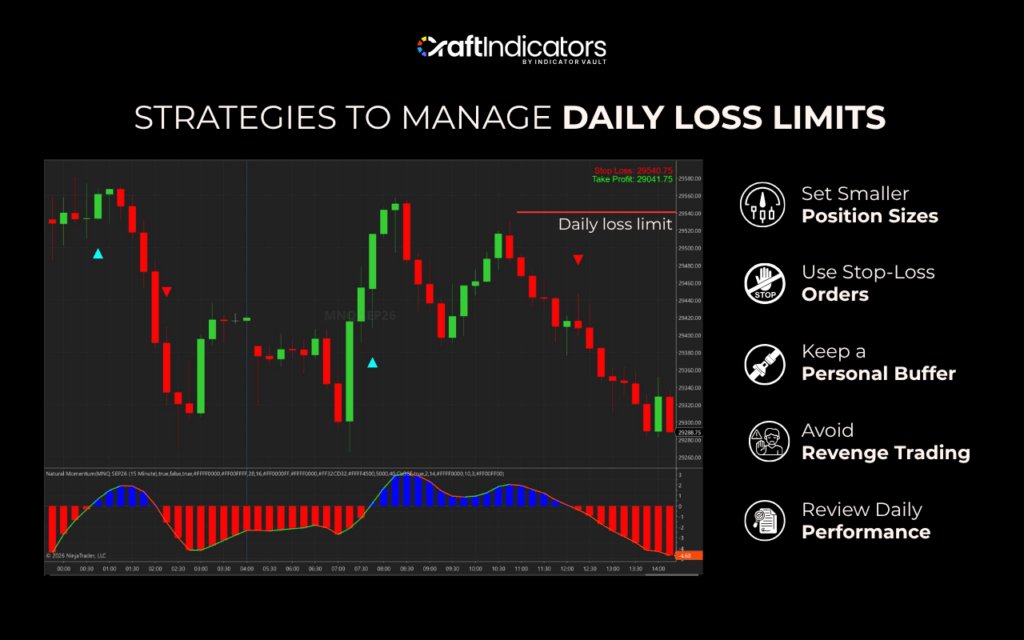
Another rule is controlling risk per trade. By risking only a small percentage of account equity, traders ensure that even a losing streak cannot wipe out their capital. Proper position sizing enforces this discipline.
Limiting the number of trades per day is equally important. Overtrading often leads to poor decisions and unnecessary exposure. Finally, every setup should be evaluated with a clear risk reward ratio. If the potential reward does not justify the risk, the trade should be avoided.
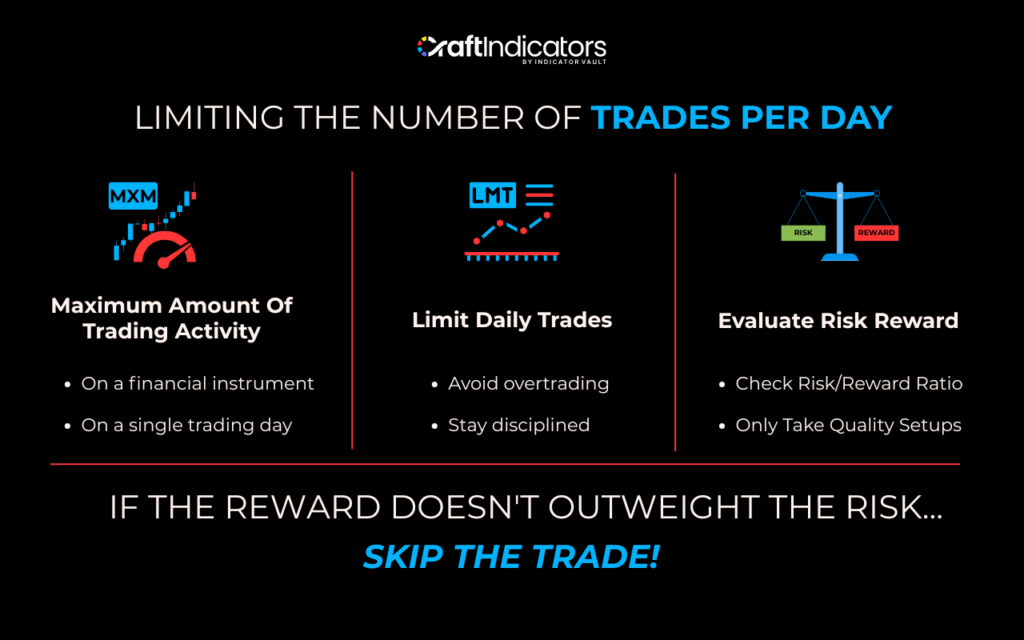
Together, these rules form a framework of risk control measures. They are simple but powerful, ensuring stronger capital preservation and consistent performance.
Practical Risk Management Tools in Action
Rules are only effective when paired with tools. The most common are stop loss strategies, proper position sizing, and evaluating trades with a clear risk reward ratio. These tools transform risk management from theory into practice, ensuring that traders can act quickly and consistently in volatile markets.
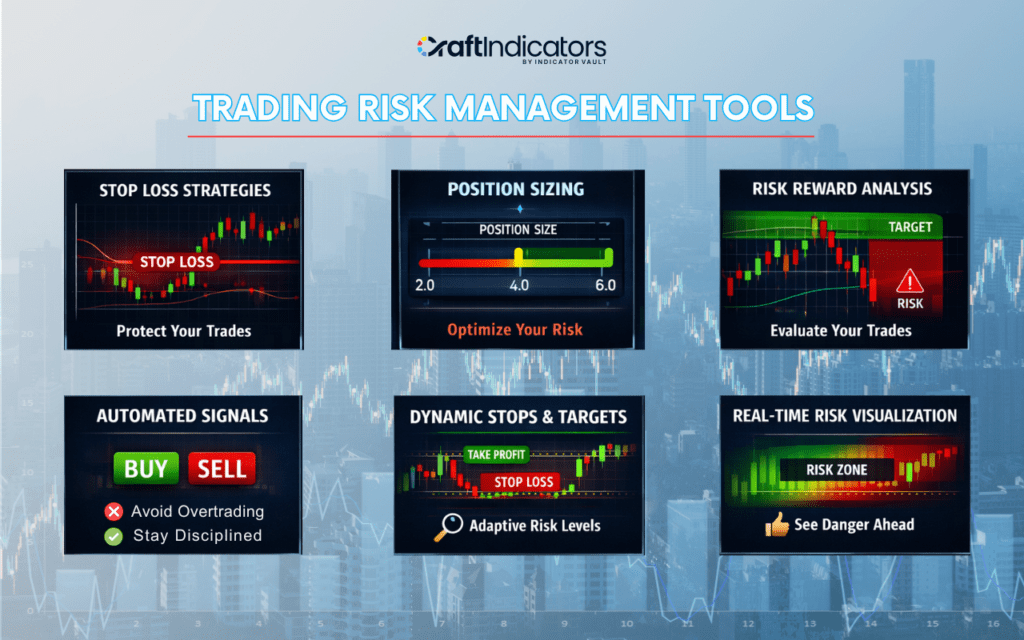
This is where Craft Indicators for NT8 elevate risk management. Our suite of NT8 indicators provides automated entry and exit signals, dynamic stop loss and take profit levels, and real‑time risk visualization.
Read More: Risk Management Strategies with NT8 Indicators
By combining these tools, traders gain a complete framework of risk control measures. Instead of manually calculating stops or targets, the platform enforces consistency, allowing traders to focus on decision‑making rather than mechanics.
Case Study: Managing Risk in a Volatile Trading Session
Imagine a futures trader entering the market during an FOMC announcement. Volatility spikes, and prices swing rapidly. Without preparation, losses could be severe.
By applying a strict daily loss limit, using volatility‑based stops, and sizing positions conservatively, the trader avoids catastrophic losses. This case shows how intraday volatility can be managed with discipline and planning.
Or, consider a forex trader entering the market during a central bank announcement. Prices swing wildly, and spreads widen. Without preparation, losses could be severe.
By applying a strict daily loss limit, using volatility‑based stops, and sizing positions conservatively, the trader avoids catastrophic losses.
Craft Indicators provide entry and exit signals that adapt to volatility, ensuring trades are managed with discipline. This case shows how day trading risk management transforms chaos into controlled decision‑making.
How NT8 Automates Day Trading Risk Management
NinjaTrader 8 offers automation that enforces discipline. The ATR volatility indicator helps set dynamic stops based on market conditions. ATM strategies automate stop‑loss and profit‑target placement, removing hesitation.
Tools like RiskRewardPlus visualize the risk reward ratio, while Dynamic Support/Resistance indicators guide stop placement. These NT8 features transform manual rules into automated safeguards, ensuring traders stick to their plan even under pressure.
Psychological Triggers That Undermine Risk Management
Even with tools, psychology can break discipline. Revenge trading after a loss, FOMO when markets move quickly, and overconfidence after a win are common traps.
Recognizing these triggers is vital. Building routines, journaling trades, and sticking to predefined rules help counter emotional impulses. Strong trading psychology is as important as technical tools, because discipline is the true edge in day trading.
Read More: Trading Psychology Tips That Turn Emotional Traders Into Consistent Ones
Building Your Personal Day Trading Risk Plan
Every trader needs a personalized plan. This includes defining risk per trade, setting daily loss limits, choosing stop‑loss rules, and applying volatility filters. Automation through NT8 ensures consistency.
A written risk management framework acts as a checklist before each session. By following it, traders create a proactive system that supports discipline and capital preservation.
Final Thoughts: Proven Strategies Protect Capital and Ensure Longevity
Effective day trading risk management is the difference between survival and failure. By combining strict rules, practical tools, psychological discipline, and NT8 automation, traders can protect their capital and achieve long‑term trading success.
Consistency comes from mastering both the technical and mental game. Strong trading psychology prevents emotional mistakes, while tools such as stop loss strategies and position sizing enforce discipline. These risk management best practices ensure traders stay in the market long enough to refine their skills, build confidence, and grow profitability.
The path to success is not about chasing every opportunity, but about protecting what you already have. With a clear risk management framework and consistent application of rules, traders can transform volatility into opportunity while safeguarding their future.
Also, follow us for all the promotions and other useful topics:
- Facebook: www.facebook.com/craftindicators
- Instagram: www.instagram.com/craftindicators
