
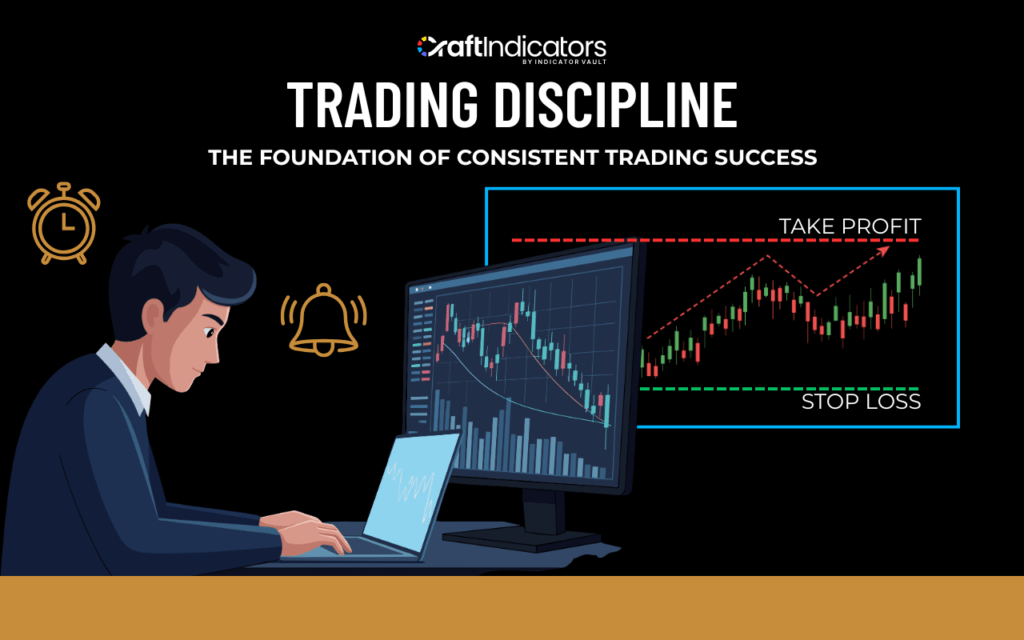
In trading, success is not defined by the newest strategy or indicator but by the strength of trading discipline.
Discipline means committing to a clear trading plan, practicing emotional control, and applying strict risk management to protect capital. It is the ability to resist impulsive trading driven by fear and greed and instead focus on consistent execution that builds long term results.
Traders often say discipline is ninety five percent of success, because it is the psychological edge that separates professionals from amateurs. Without discipline even the best setups collapse, while with discipline ordinary strategies become powerful.
What Is Trading Discipline?
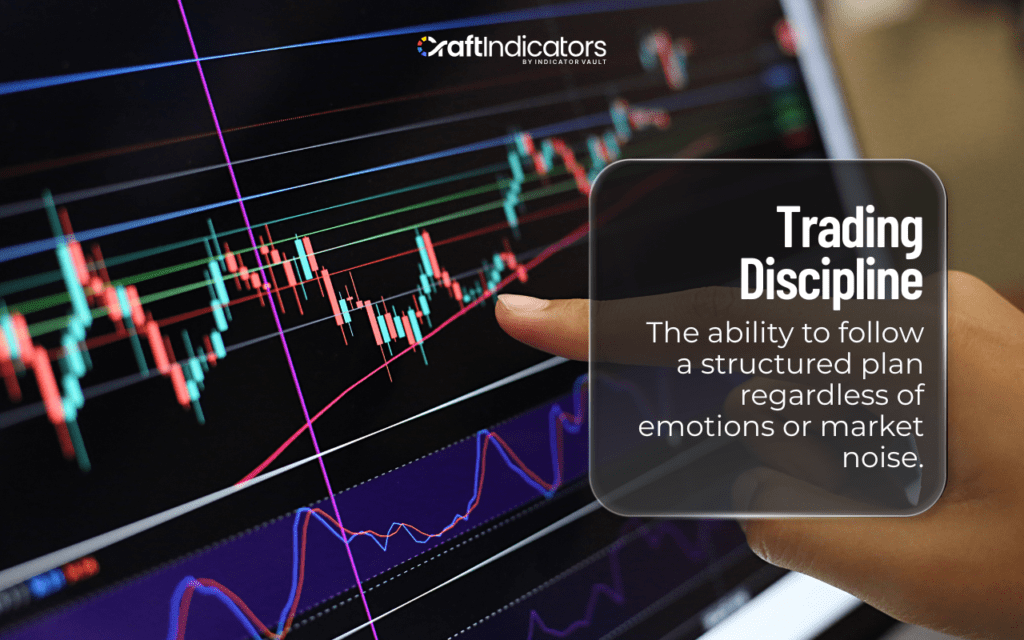
Trading discipline is the ability to follow a structured plan regardless of emotions or market noise. It keeps traders consistent and focused on process rather than chasing outcomes.
At its core, discipline means practicing self‑discipline and controlling impulses. It is about making decisions based on logic and structure, not reactions. This mindset enforces rules even when temptation arises, ensuring sustainability in trading.
The Psychology Behind Discipline in Trading
Discipline is deeply connected to trading psychology. Stress, uncertainty, and emotional impulses constantly challenge traders.
Cognitive biases often undermine discipline. Loss aversion makes traders cling to losing positions, while confirmation bias pushes them to seek signals that justify poor decisions. Anchoring bias can cause fixation on past prices, leading to poor judgment.
The solution is emotional control. Discipline means acknowledging emotions without acting on them, allowing decisions to be guided by structure rather than reactions.
Read More: Trading Psychology: Mastering the Mental Edge in Markets
The Role of a Trading Plan in Building Discipline
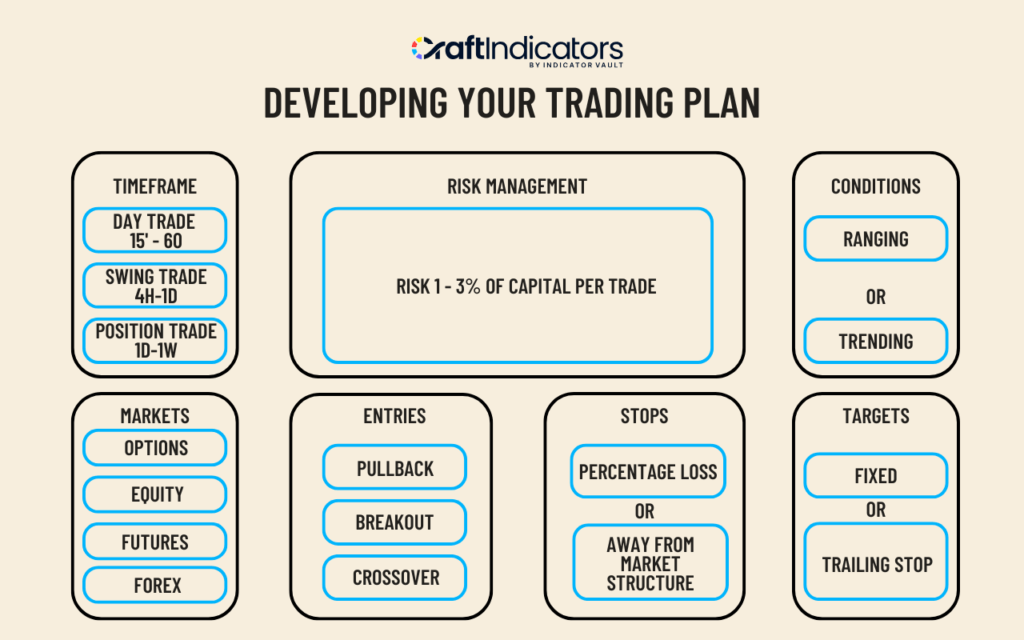
A trading plan is the roadmap that keeps traders focused. It defines entry and exit rules, risk limits, and position sizing. With a plan in place, discipline becomes easier because decisions are guided by structure.
The principle of plan your trade, trade your plan prevents impulsive moves and ensures every trade is intentional. Following a plan builds consistent execution and reduces randomness, turning discipline into daily practice.
Risk Management: The Practical Side of Discipline
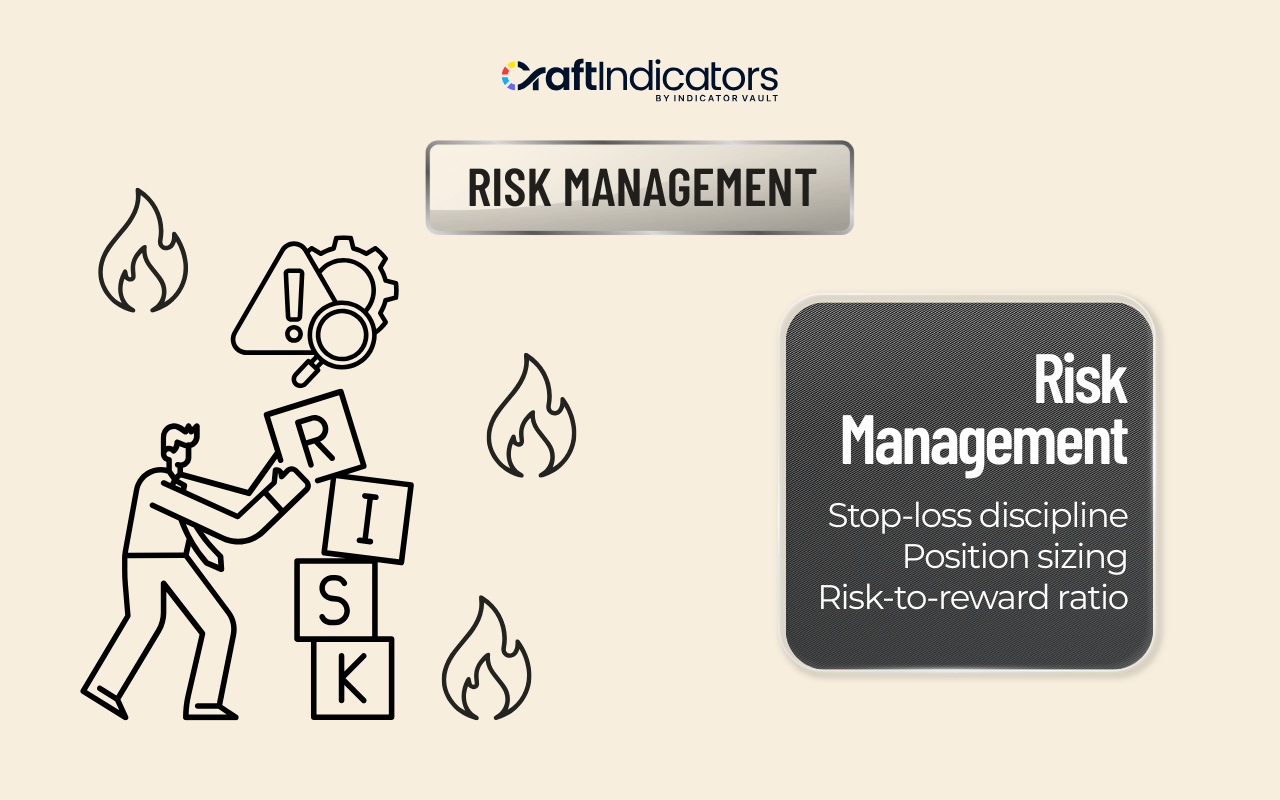
Discipline is inseparable from risk management. Protecting capital requires strict rules that define how much risk is taken on each trade.
- Stop‑loss discipline: Prevents small losses from becoming catastrophic.
- Position sizing: Adjusts trade size to account balance and tolerance.
- Risk‑to‑reward ratio: Ensures trades have favorable potential.
These guardrails transform trading from a gamble into a structured process where capital protection is the priority.
Habits and Routines That Strengthen Discipline
Discipline is not only practiced during trades. It is built through daily habits and routines that shape consistency. A trader who follows structure outside the charts is more likely to stay disciplined inside them.
- Daily trading routine: Wake up at the same time and prepare mentally.
- Pre‑market checklist ensures rules are reviewed before trading.
- Structured habits like journaling or meditation improve focus.
- Consistency in routine builds discipline over time.
Lifestyle choices also matter. Habit‑building outside trading, such as exercise, diet, or mindfulness, strengthens self‑control. These routines train discipline in everyday life, which then transfers to trading decisions.
Practical Steps to Improve Trading Discipline
Improving discipline requires actionable tactics that traders can apply daily. These steps combine structure, accountability, and lifestyle habits to strengthen consistency.
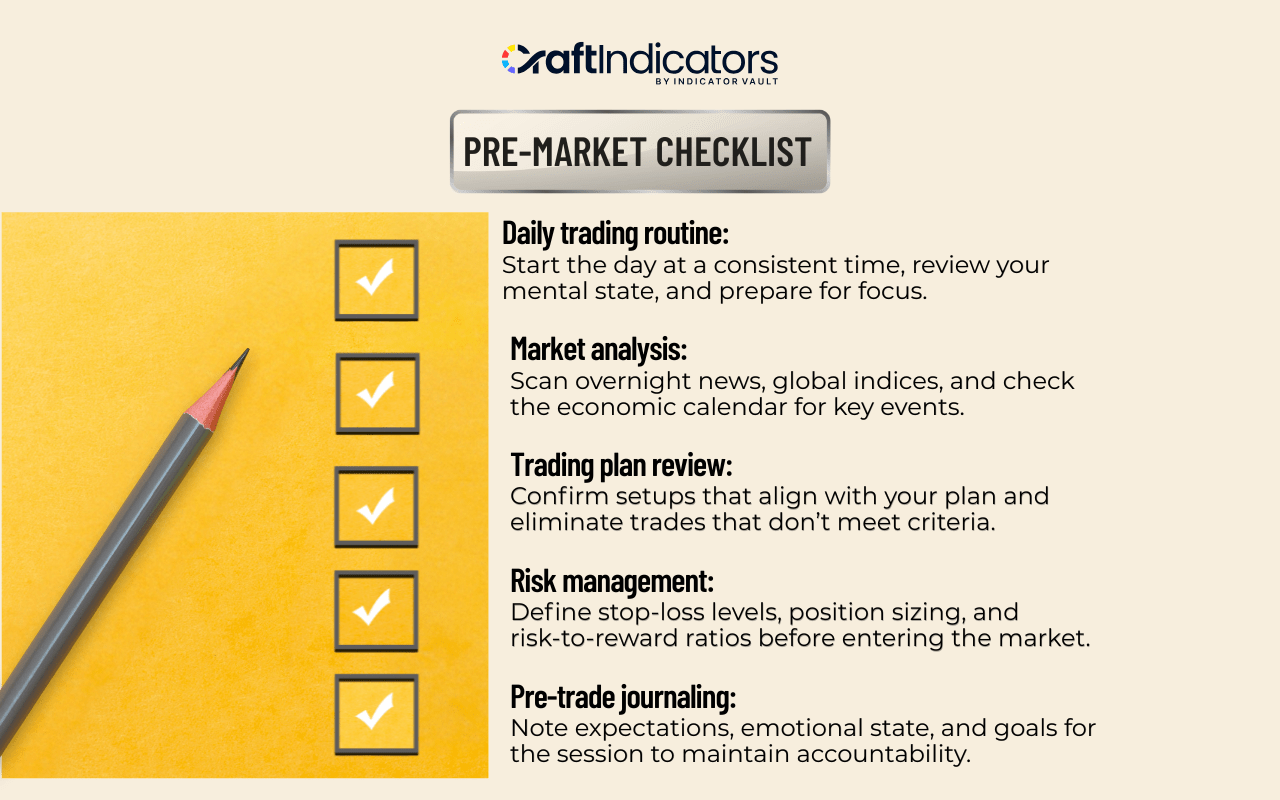
Use a Pre‑Market Checklist
A pre‑market checklist sets the tone for the trading day. It ensures you start with structure instead of reacting to market noise. Traders who prepare consistently are less likely to make impulsive decisions.
Journal Every Trade and Emotion
Journaling builds awareness of emotional triggers and helps identify patterns that weaken discipline. It also creates accountability.
Why Journaling Works:
- Trading journals: Track setups, entries, exits, and outcomes.
- Emotional control: Note feelings like fear, greed, or hesitation.
- Accountability: Reviewing journals exposes patterns of impulsive trading and helps correct them.
Over time, journaling builds self‑awareness and strengthens discipline by making emotions visible instead of hidden.
Set Strict Risk Parameters
Discipline is impossible without clear risk management. Defining risk per trade ensures sustainability and prevents emotional overrides.
Core Risk Rules:
- Stop‑loss discipline: Always set stops before entering a trade.
- Position sizing: Adjust trade size to account balance and risk tolerance.
- Risk‑to‑reward ratio: Only take trades with favorable reward potential.
These parameters act as guardrails. They protect capital and enforce discipline even when emotions push for riskier moves.
Practice Rule‑Based Execution
Following predefined entry and exit rules eliminates randomness. This builds consistency and avoids chasing trades. By repeating structured execution, traders build habits that strengthen discipline and reduce emotional interference.
Read More: Simple and Effective Exit Trading Strategies
Build Discipline Outside the Charts
Lifestyle habits like exercise, diet, and mindfulness strengthen self‑control. Discipline practiced in daily life transfers directly to trading. When discipline becomes part of daily life, it naturally strengthens trading performance.

Discipline Across Different Markets
Discipline looks different depending on the market you trade. Each environment has unique challenges that test consistency and emotional control.
In futures trading discipline, traders face high leverage and fast price movements. Discipline here means sticking to strict risk limits and avoiding overexposure.
For forex trading discipline, the challenge is constant market activity. With currencies trading 24 hours a day, discipline requires patience and the ability to avoid unnecessary trades.
In stock trading discipline, traders must manage volatility around earnings, news, and market sentiment. Discipline means following a plan and not chasing headlines.
Across all markets, patience in trading is the common thread. Waiting for setups that align with your plan is the ultimate test of discipline.
Key Takeaways
Discipline is the trader’s true edge. It protects capital, enforces consistency, and builds long‑term success.
- Discipline is the trader’s edge: More important than strategy or tools.
- Discipline protects capital: Risk management ensures sustainability.
- Long‑term success: Consistency compounds results over time.
- Consistency: The habit that transforms ordinary strategies into powerful ones.
Without discipline, even the best setups collapse. With discipline, ordinary strategies become powerful tools for lasting success.
Conclusion
Trading success is not built on chasing the perfect strategy but on mastering discipline. By following a clear plan, applying risk management, and practicing emotional control, traders create the foundation for sustainable growth. Discipline is the skill that protects capital, enforces consistency, and transforms ordinary strategies into powerful tools for long‑term success.
Don’t forget follow us to get more interesting news as well as great promotions:
Find this article useful? Share this blog with your friends on social media!
