

Scalping is a highly demanding trading style that rewards preparation and discipline. This article breaks down essential concepts and expert techniques to help you build a profitable scalping trading strategy step-by-step.
1. What Is Scalping In Trading?
Scalping in trading is a short-term strategy where traders aim to profit from very small price movements by executing multiple trades within minutes or seconds.
It relies heavily on speed and precision, with entry and exit points guided by technical indicators such as moving averages, RSI, Bollinger Bands, and stochastic oscillators.
Scalping involves higher risk due to frequent trading, tight stop-loss levels, and the common use of leverage to amplify both gains and losses.
Strong discipline and risk management are crucial, as scalpers must monitor the market continuously, control losses, and secure quick profits consistently.
2. Scalping Trading Strategies
Scalping is most effective when paired with technical indicators that help identify entry and exit points quickly. Let’s explore some popular scalp trading methods:
2.1. Scalp Trading Using the Stochastic Oscillator
Since scalping relies on speed, traders often combine stochastic signals with support/resistance levels for confirmation.
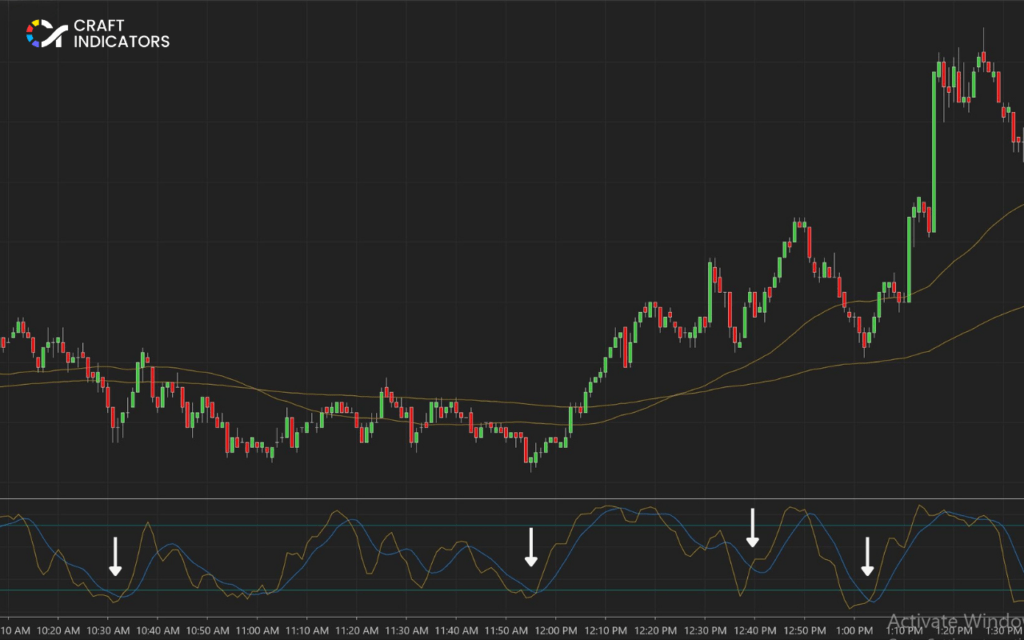
In the first chart, ES is shown on a 1-minute timeframe in a clear uptrend. Price remains above the moving averages, confirming bullish market conditions.
Instead of chasing price higher, the scalping approach waits for temporary pullbacks.
- As price pulls back, the stochastic oscillator drops toward the oversold zone near 20.
- These pullbacks represent short-term weakness, not a trend reversal.
- When the yellow line crosses above the blue line, it signals momentum shifting back upward.
Each of these bullish crossovers (marked by arrows) provides a scalp entry for long trades. Price then resumes its upward move, allowing traders to capture small, quick profits.
Exit strategy:
- Close the trade when the stochastic reaches the upper zone above 80, or
- Exit earlier if a bearish crossover appears (yellow line crosses below blue line).
The second chart shows ES in a downward trend on the same 1-minute timeframe. Price trades below the moving averages, confirming bearish conditions.
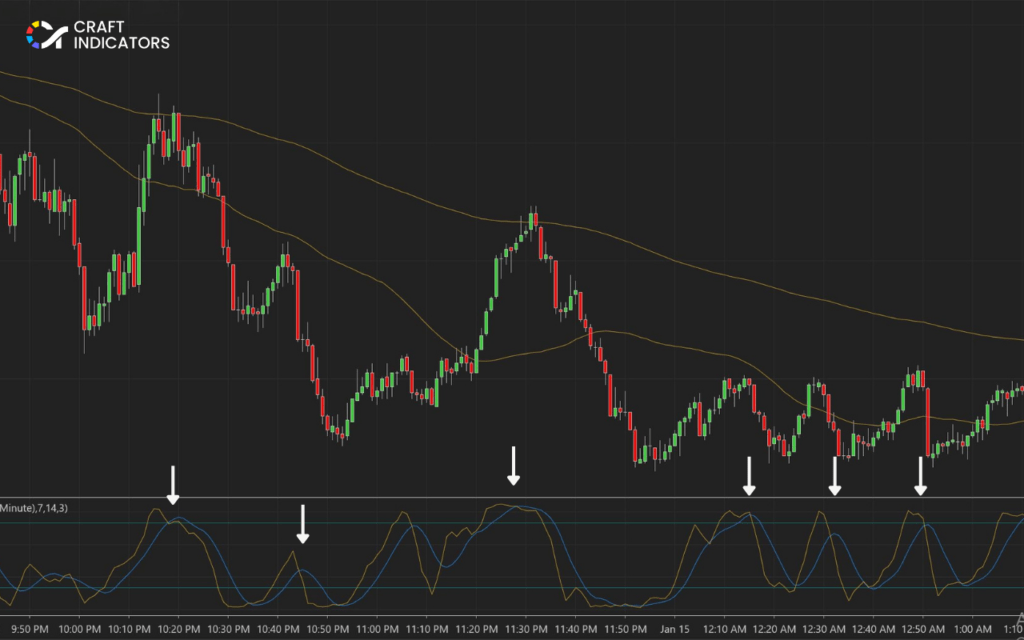
Here, the logic is reversed.
- Price makes short-term rallies against the main downtrend.
- During these rallies, the stochastic rises toward the overbought zone near 80.
- When the yellow line crosses below the blue line, bearish momentum returns.
These bearish crossovers (marked by arrows) signal short scalp entries. Price then continues lower, allowing traders to capture quick downside moves.
Exit strategy:
- Take profits as the stochastic approaches 20, or
- Exit if a bullish crossover forms against the position.
This approach focuses on selling rallies, not chasing prices downward.
2.2. Scalp Trading Using the Moving Average
Another popular scalping method uses moving averages to identify trend direction and entry points. This approach combines two short-term moving averages with one long-term moving average to stay aligned with the main trend.
Traders typically use:
- A fast-moving average (such as a 5-period, green line)
- A slow-moving average (such as a 20-period, yellow line)
- A long-term moving average (such as a 200-period, red line) to confirm trend direction
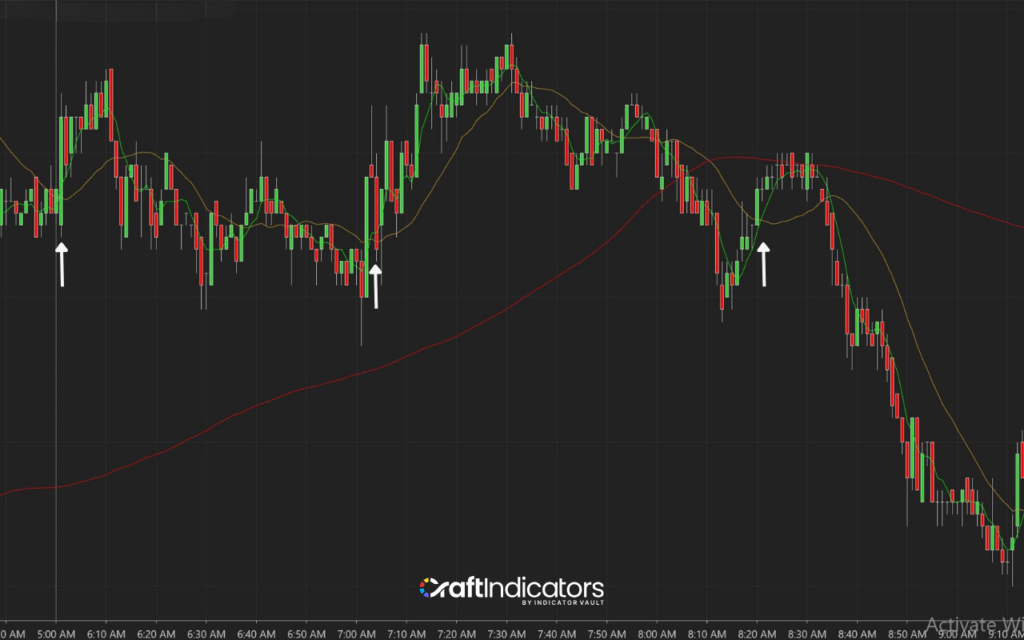
When the 200-period moving average is rising, the market is in an uptrend. Traders only look for buy (long) trades in this condition. A buy signal appears when:
- The 5-period MA crosses above the 20-period MA
- Price stays above the 200-period MA
These crossovers show growing buying pressure. Trades are entered in the direction of the trend, not against it.
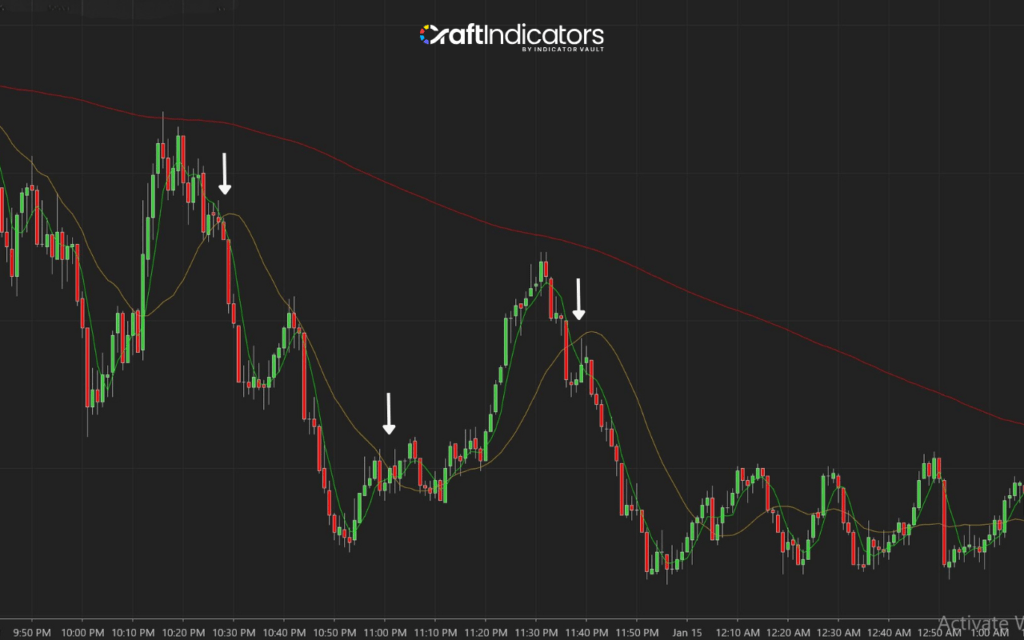
When the 200-period moving average is falling, the market is in a downtrend. Traders only look for sell (short) trades. A sell signal appears when:
- The 5-period MA crosses below the 20-period MA
- Price remains below the 200-period MA
This setup shows sellers are in control. Traders enter short positions as price continues lower.
Key Rules to Remember
- Always trade with the main trend.
- Do not try to catch every market move.
- Focus on small, high-probability trades.
- Use tight stop-loss orders on every trade.
- Strong risk management protects many small gains.
2.3. Scalp Trading Using the Momentum
Scalping can also be performed using a momentum indicator, which measures the strength and speed of price movement. This approach focuses on entering trades when momentum begins to increase and exiting as it starts to fade.
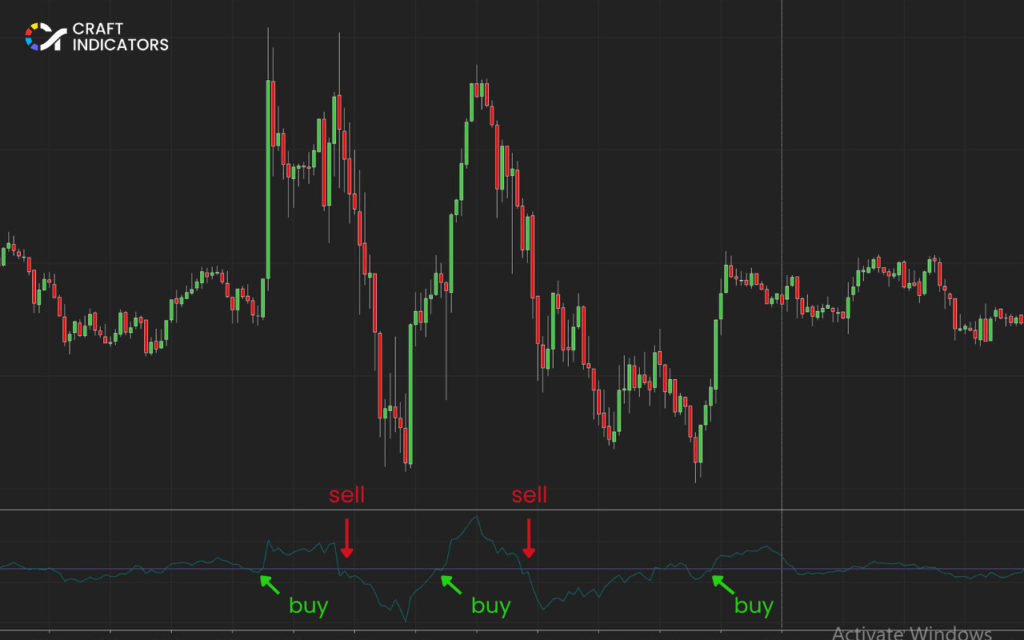
In strong upward moves, momentum rises above the zero line, confirming buying pressure. It signals opportunities to enter long scalp trades on small pullbacks or breakouts.
In downward moves, momentum drops below the zero line, showing selling pressure. It creates chances to enter short scalp trades during brief rallies.
The key is to trade in the direction of momentum, not against it, and to exit quickly once momentum slows or reverses. As with all scalping strategies, momentum scalping works best in active markets. They require strict risk management to protect small, frequent profits.
2.4. Scalp Trading Using the RSI
Another effective scalping method uses the Relative Strength Index (RSI) to find entries that follow the main trend. This approach works best when the market direction is clear and supported by moving averages.
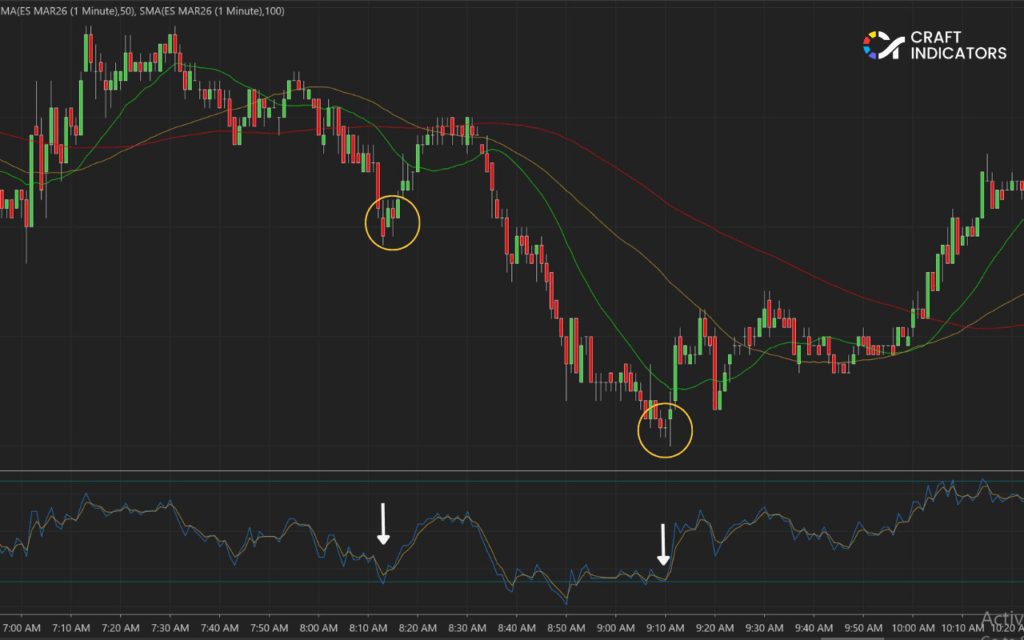
In an uptrend, price moves steadily higher. Moving averages point upward, confirming bullish conditions. Traders focus on buying pullbacks, not chasing highs. A buy opportunity forms when:
- The RSI drops toward 30 during a pullback.
- The RSI then moves back above 30.
This move shows selling pressure is fading. Traders enter long scalp trades as the uptrend resumes.
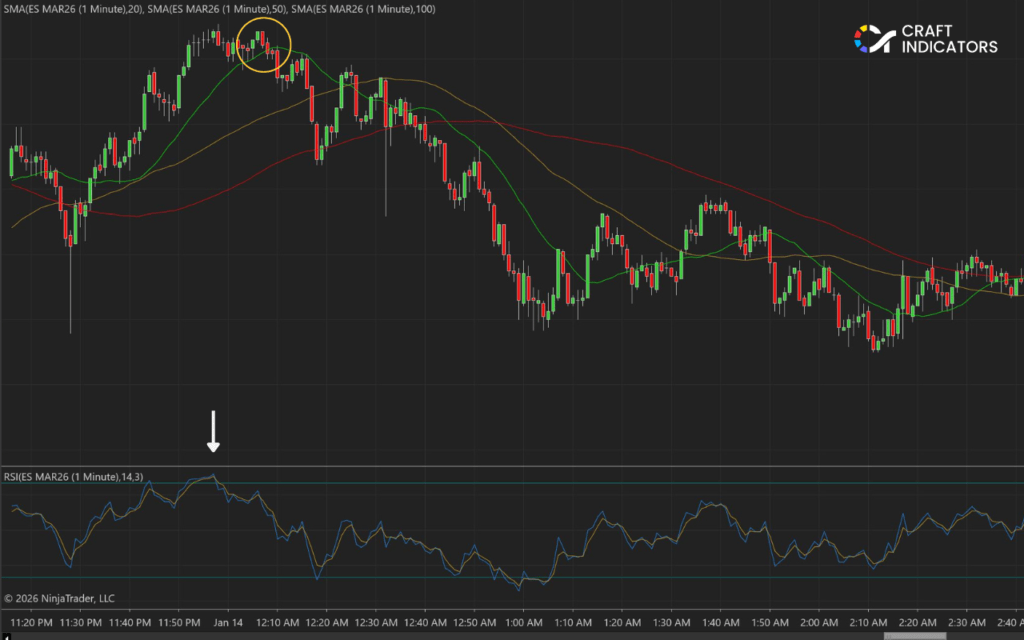
By contrast, in a downtrend, price moves steadily lower. Moving averages point downward, confirming bearish conditions. Traders focus on selling rallies, not buying dips. A sell opportunity forms when:
- The RSI rises toward 70 during a rally
- The RSI then turns lower from 70
This shows buying pressure is weakening. Traders enter short scalp trades in the direction of the trend.
3. Read This Before You Start Scalping
Scalping can be profitable, but it requires discipline, skill, and the right conditions. Before diving into this strategy, keep these points in mind:
- Transaction Costs: High-frequency trading means more commissions and spreads. Choose a broker with low fees.
- Liquidity & Volatility: Only scalp assets with enough liquidity for tight spreads and smooth execution.
- Execution Speed: Delayed entries or exits can eat away at profits. A fast trading platform is essential.
- Discipline: Scalping demands quick decisions and strict adherence to rules. Emotional trading can lead to overtrading.
- Risk Management: Even small moves can go against you. Always use stop-loss orders to limit risk.
4. Scientific Scalper Indicator: This Mix Of Smart Technology & Scientific Trading
The markets don’t move by chance; every short-term price fluctuation is driven by data, volume, and trader behavior that follows repeatable patterns. Most scalpers fail not because the strategy is flawed, but because they rely on late signals and emotional decision-making.
The Scientific Scalper Indicator for NT8 shifts scalping from reactive guessing to precision-based execution. Instead of chasing micro-moves, it analyzes real-time market conditions using smart technology and scientifically tested logic to identify high-probability scalping opportunities. You’re no longer relying on scattered indicators; you’re trading with structured, data-backed signals.
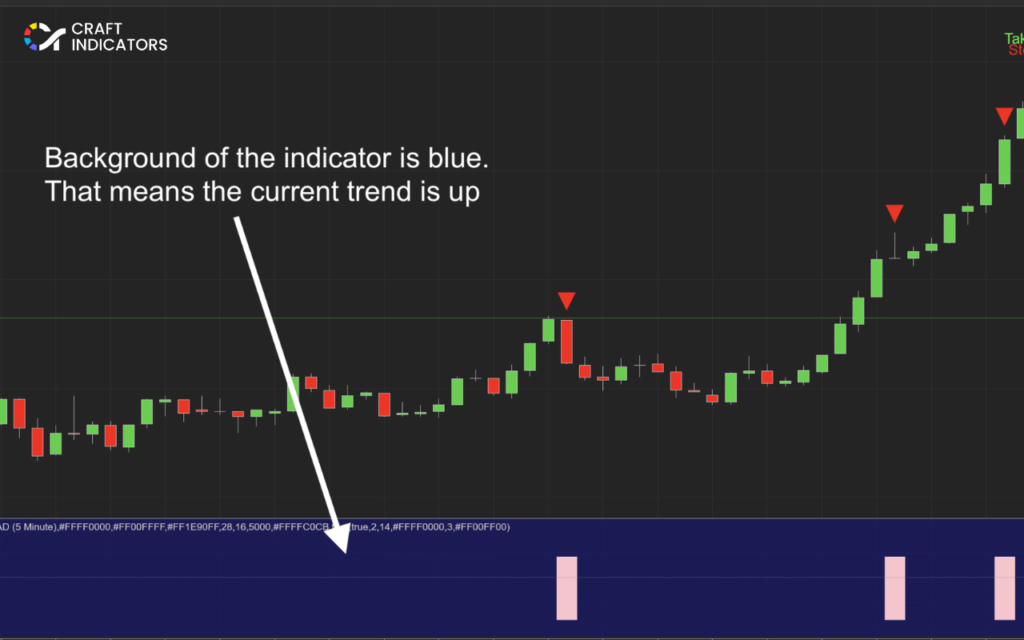
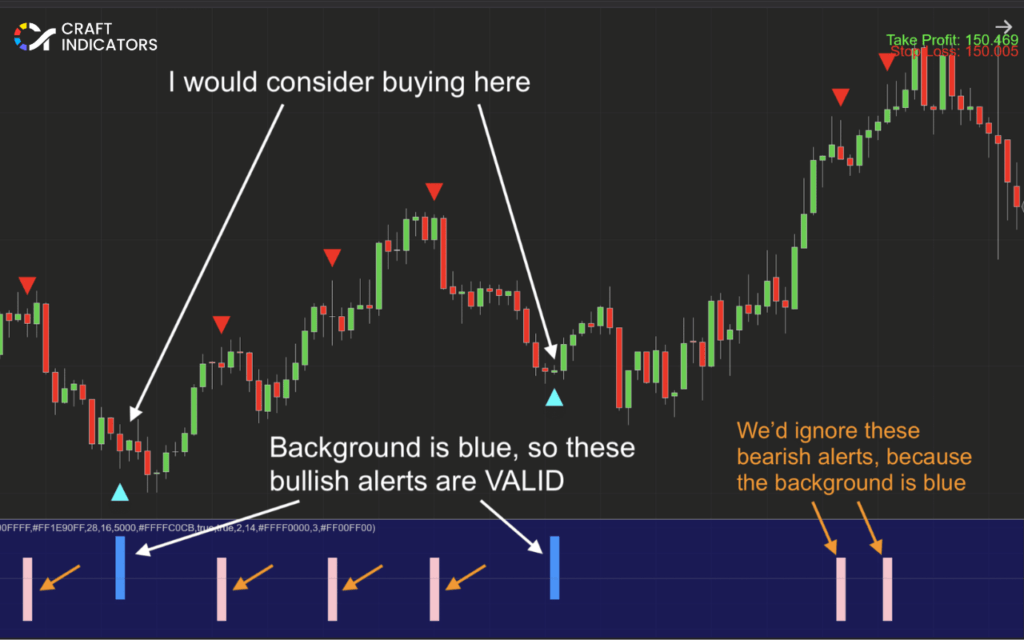
The result? Before, you’re entering too late and exiting too early. After, you’re trading with precision, confidence, and control, executing scalps exactly where the market makes sense.
Final Thoughts
Scalping success comes from clear rules, fast execution, and strict risk control. When used correctly, a proven scalping trading strategy can deliver steady, small profits consistently.
If you're looking for some knowledge-trading articles or an update on our newest indicators, you can find them here:
What do you think? Do you have any suggestions for using scalping strategies?
Comment below to share your idea!
Find this article useful? Share this blog with your friends on social media!
