How Price Consensus Reversal works
The “magic” behind Price Consensus Reversal lies in its three-part statistical framework:
Step One: Establish market consensus
First, the indicator calculates the fair price that the market collectively “agrees” on right now.
This value shows where the price would settle if no new forces influenced the market.
This is not just a simple moving average. It is a complex calculation. It looks at the whole price structure – highs, lows, and closes. And then finds the real market consensus.
Step Two: Adjust for specific market volatility
Next, Price Consensus Reversal measures your market’s volatility. It uses True Range to create a volatility factor that adjusts to changing market conditions.
This adaptive approach makes sure that the indicator works well in both calm or volatile markets.
Step Three: Measure meaningful price deviation
Finally, the indicator calculates exactly how far price has stretched from consensus relative to current volatility.
The formula is elegantly simple yet powerful:
(Close Price – Consensus Value) / Volatility Factor
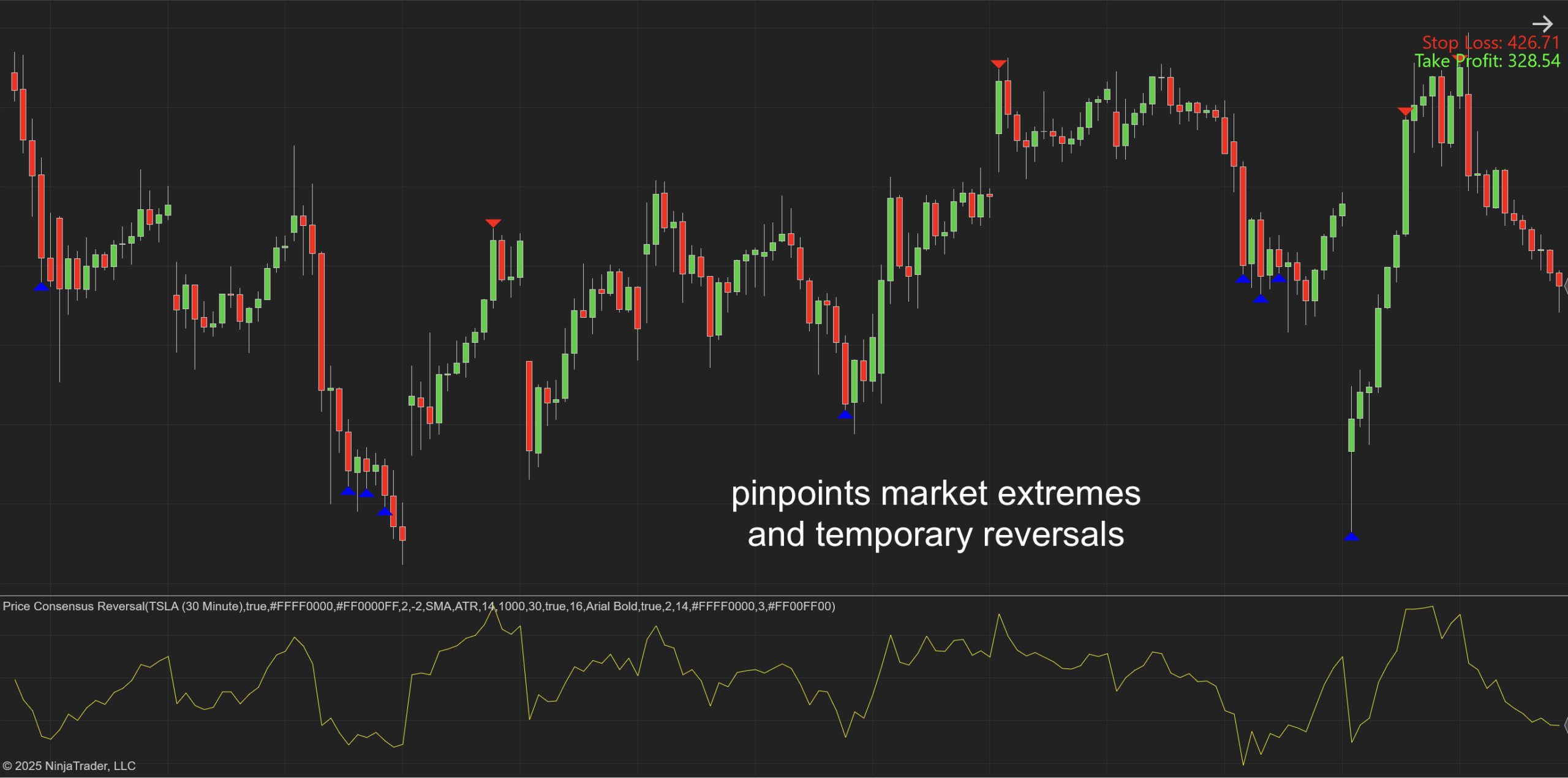
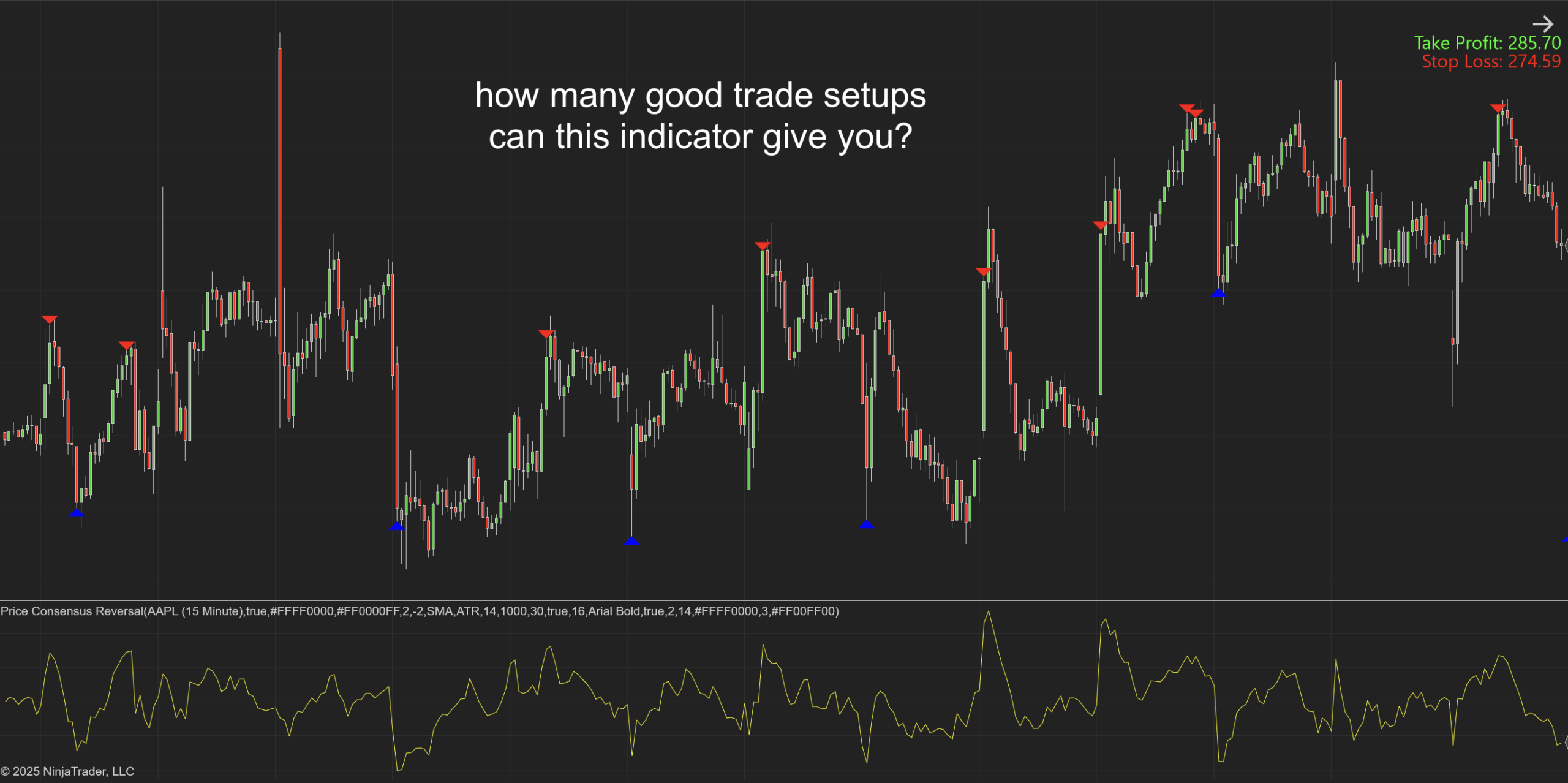
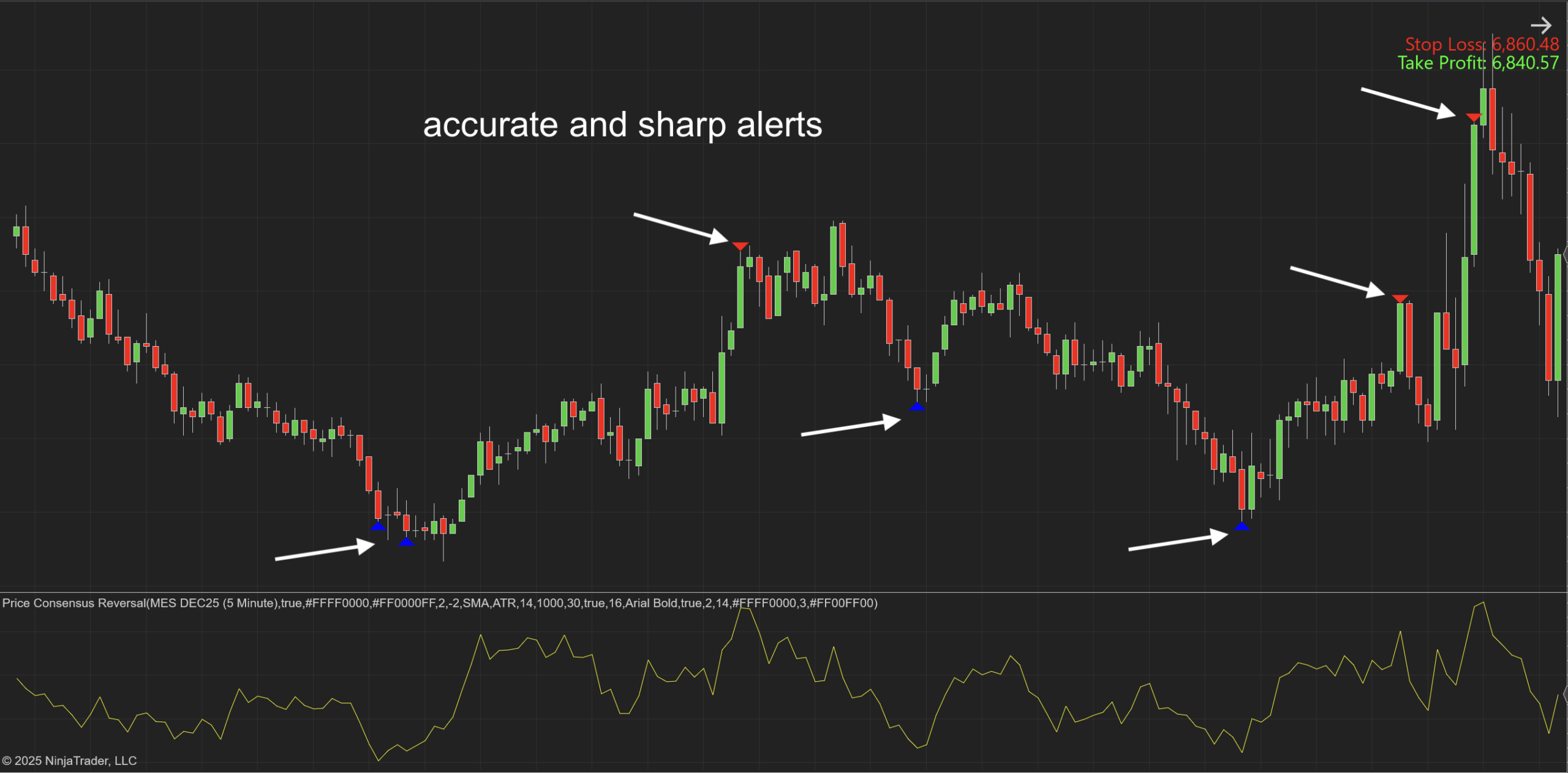
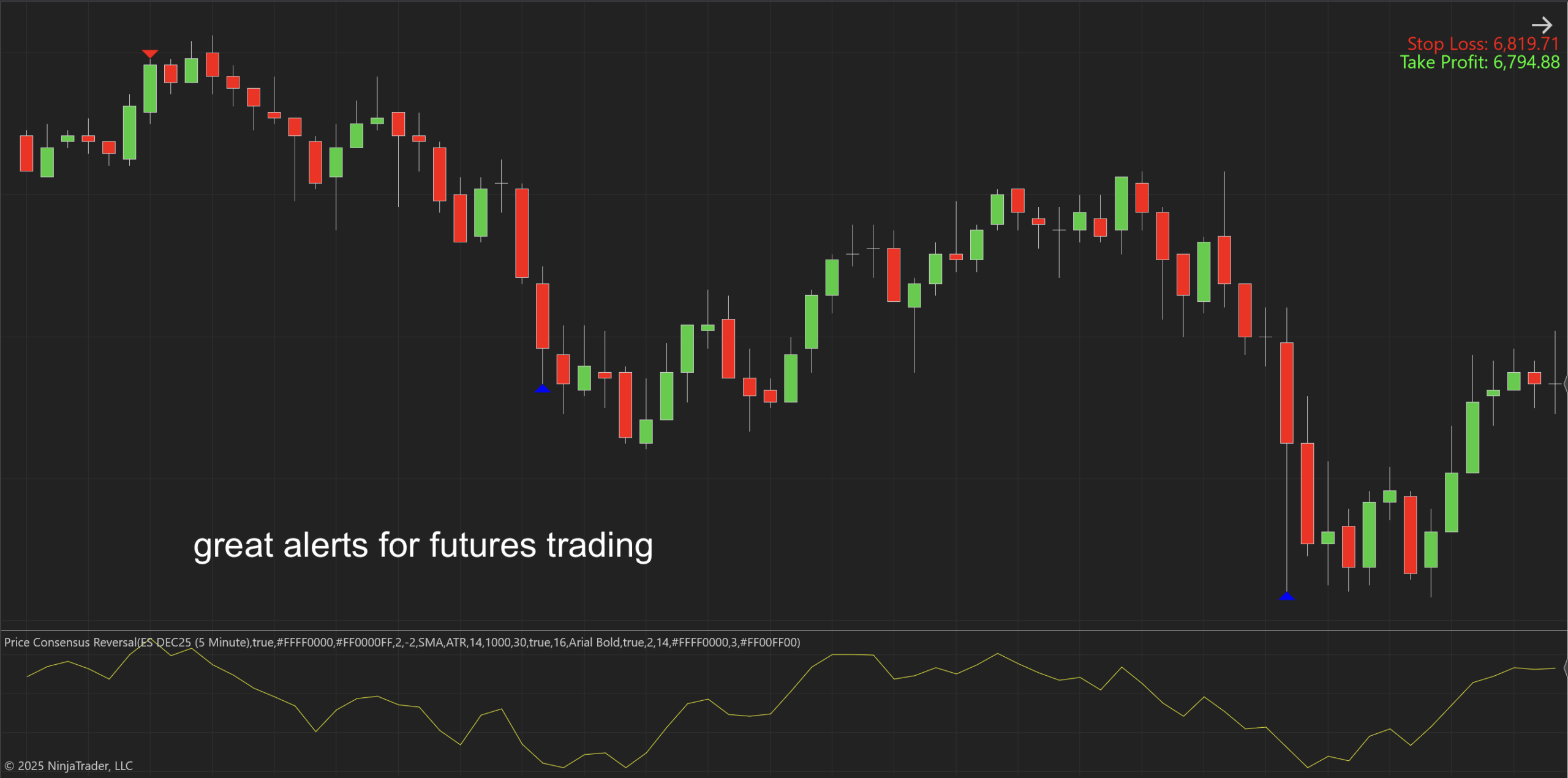
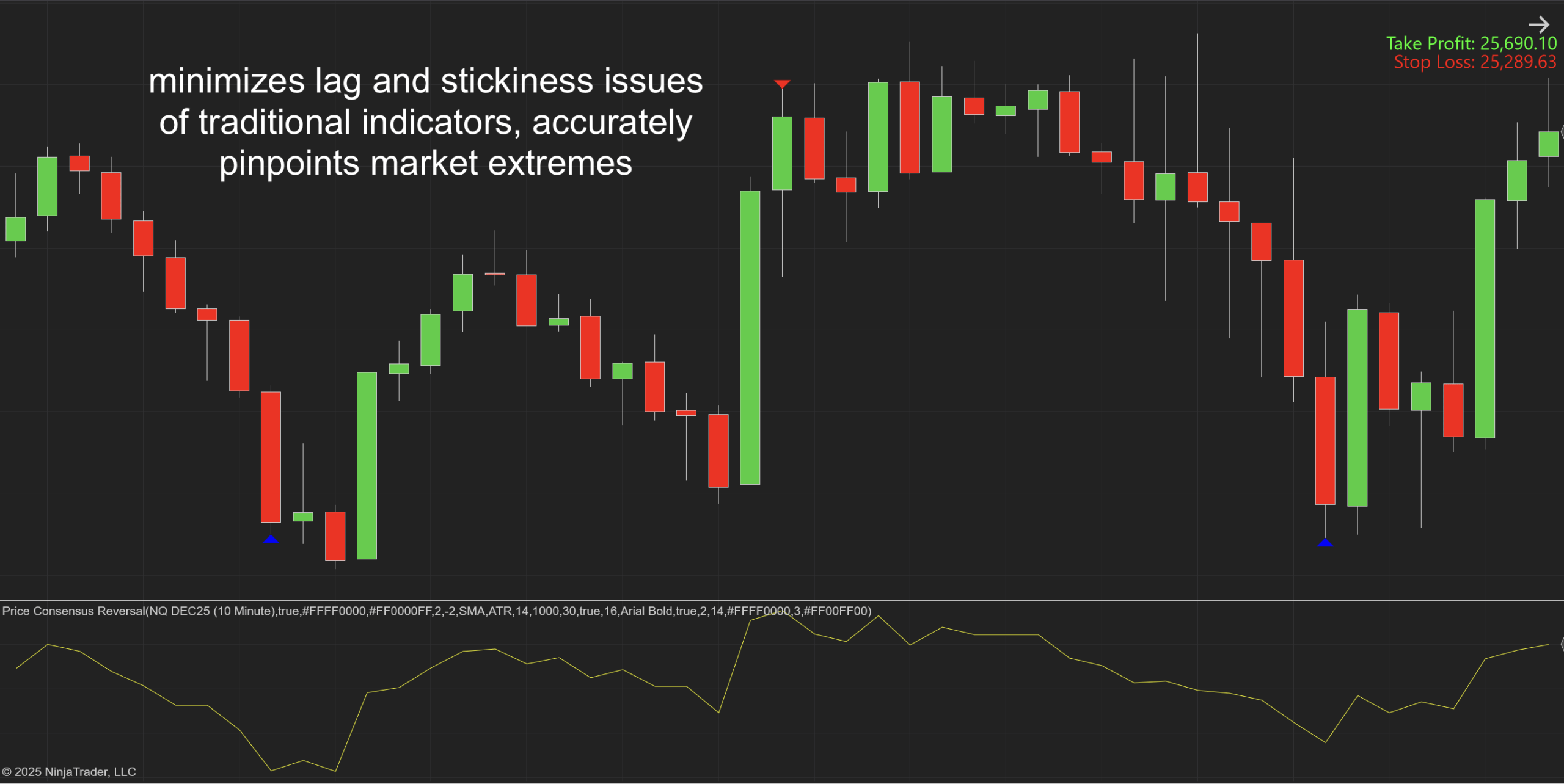
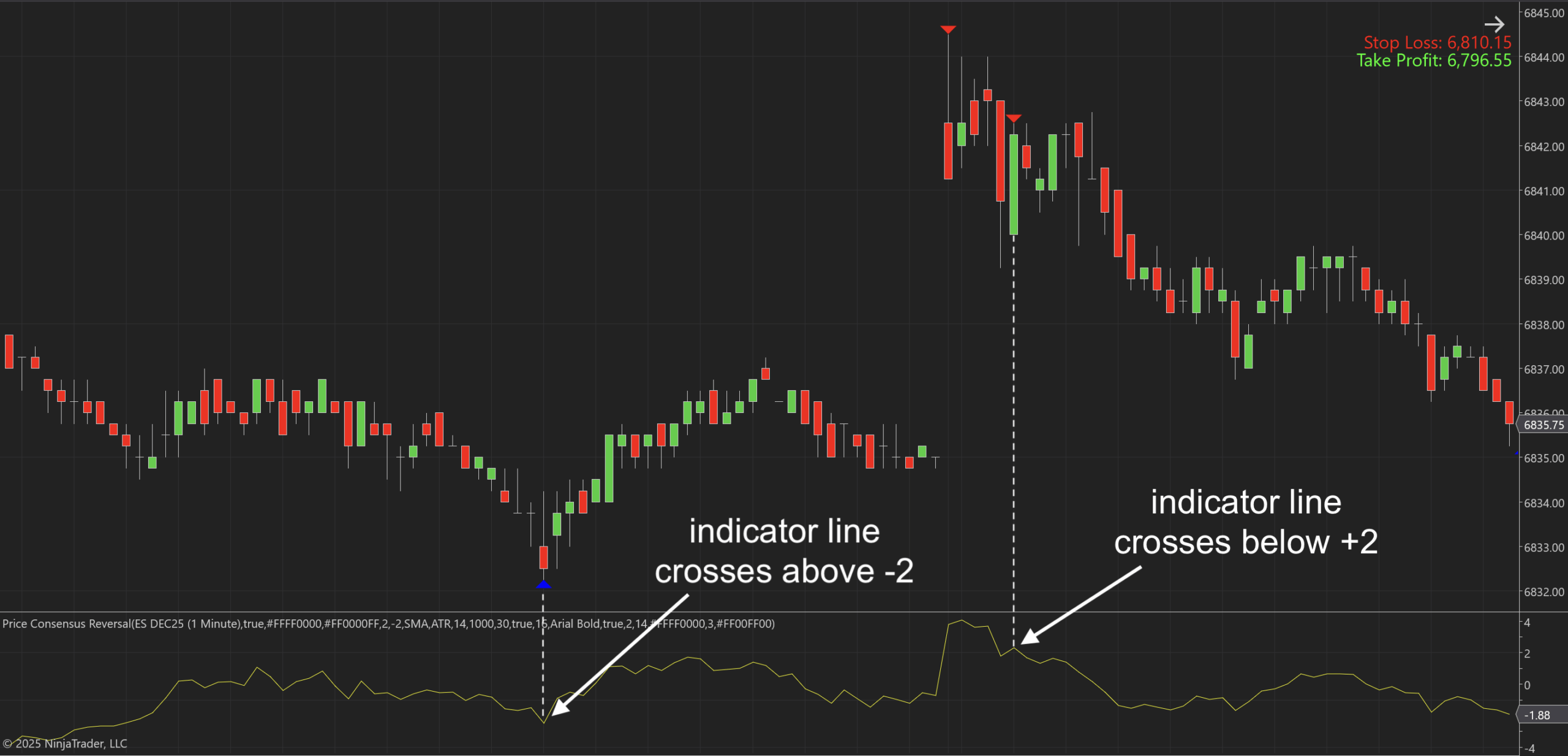
When this value crosses above -2, it signals a buy opportunity.
When it crosses below +2, it signals a sell opportunity.
These levels aren’t random. They are significant deviations that help spot high-probability reversal points across all market types.